An official website of the United States government



Glossary
Definitions
Air and spacecraft and related machinery, manufacture of: Includes the manufacture of airplanes for the transport of goods or passengers, defense forces, or other purposes; helicopters; gliders and hang gliders; dirigibles and hot air balloons; parts and accessories of the aircraft of this class; ground-flying trainers; spacecraft and launch vehicles, satellites, planetary probes, orbital stations, and shuttles; intercontinental ballistic missiles; overhaul and conversion of aircraft or aircraft engines; and aircraft seats.
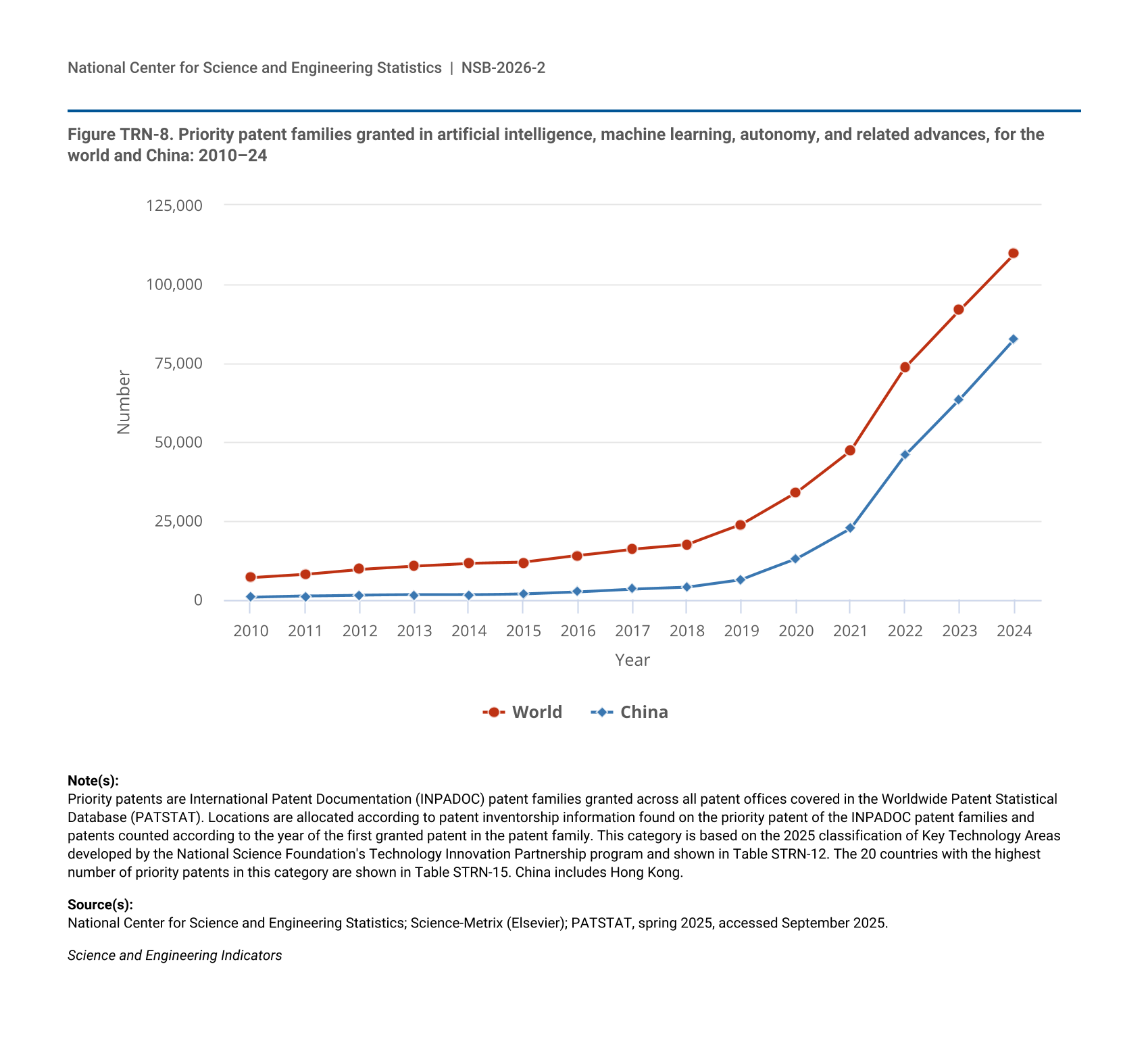
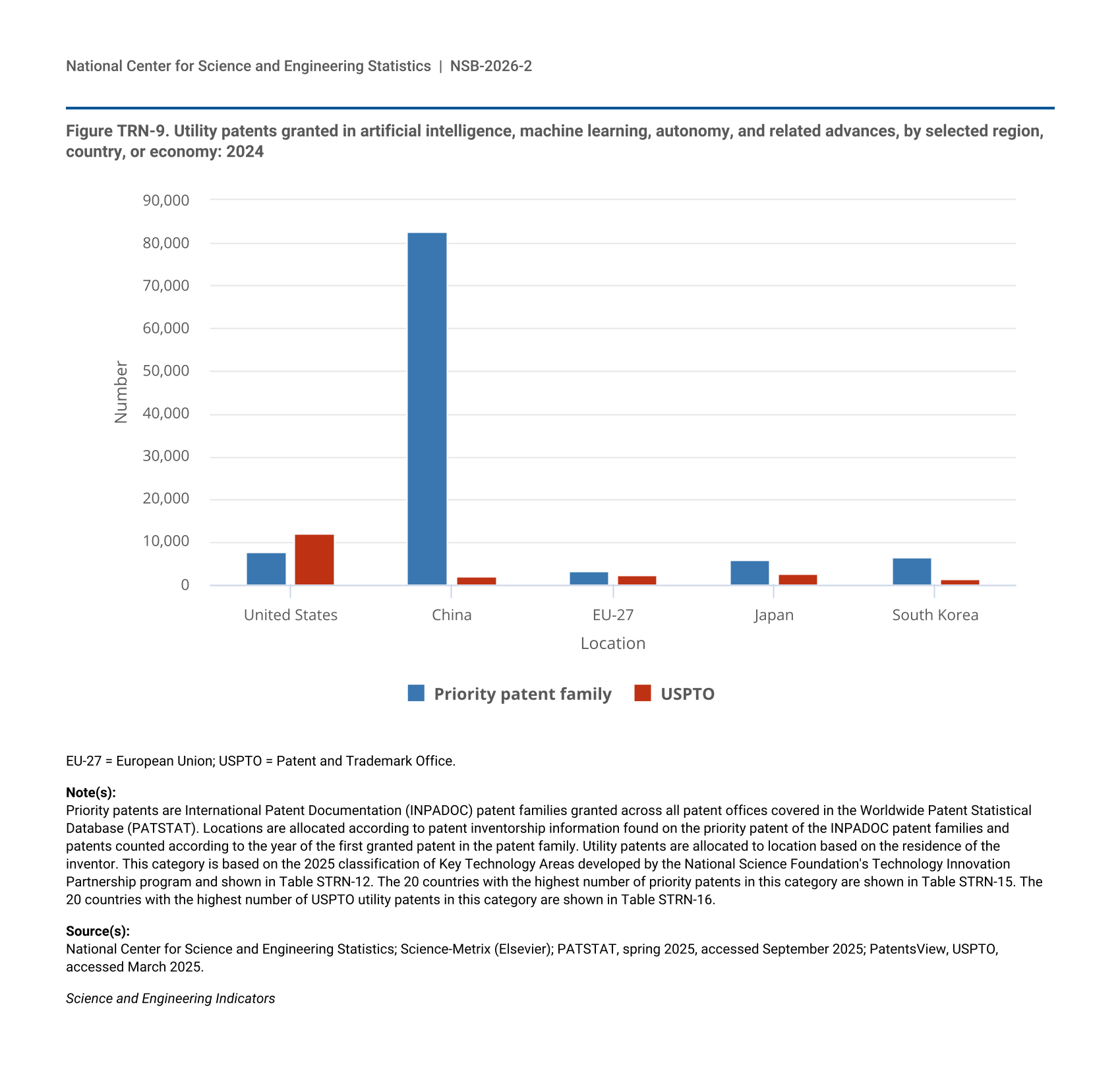
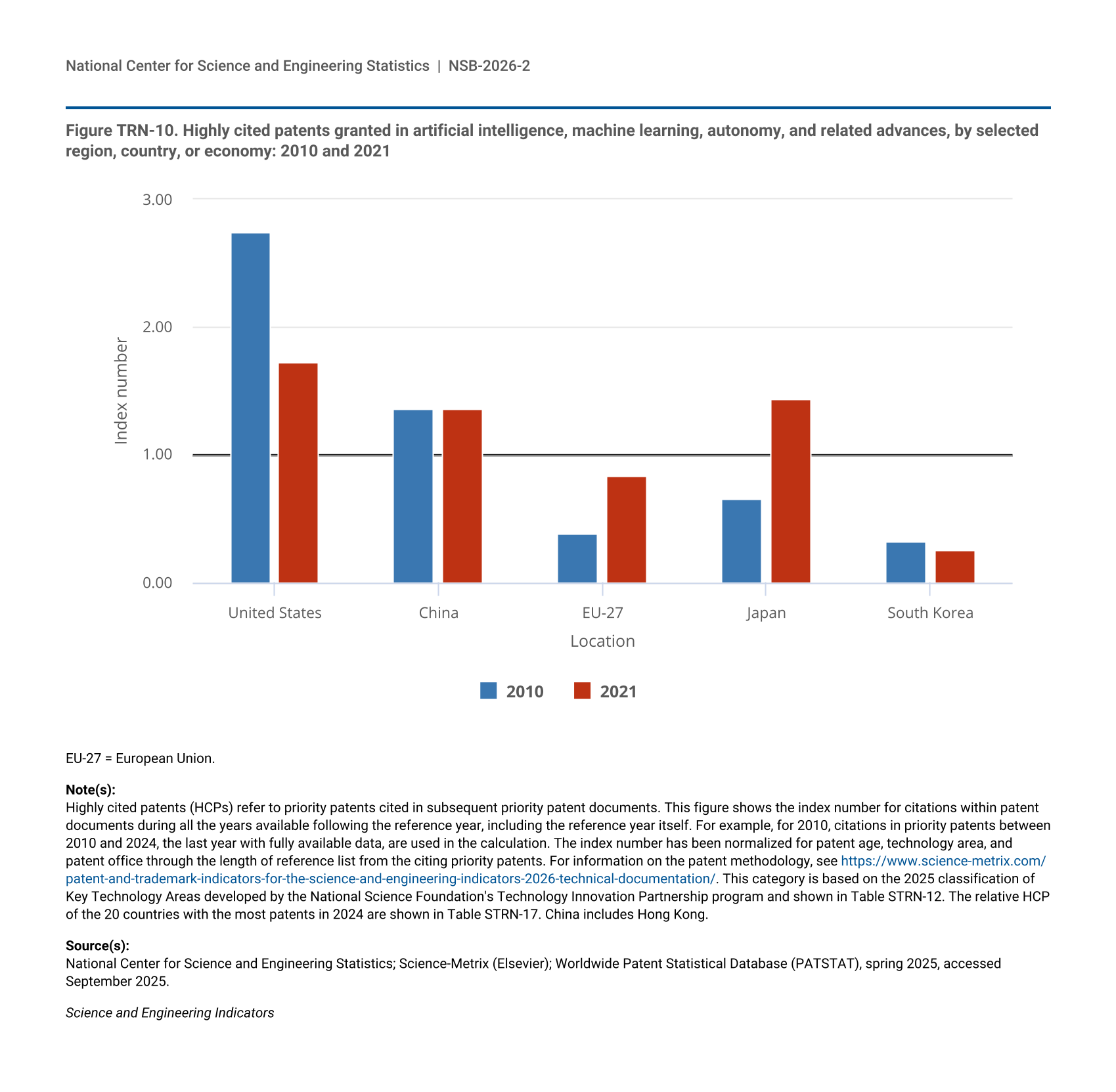
Artificial intelligence (AI): Computer systems that can perform tasks such as reasoning, decision-making, and creating normally done by humans (NASA 2025).
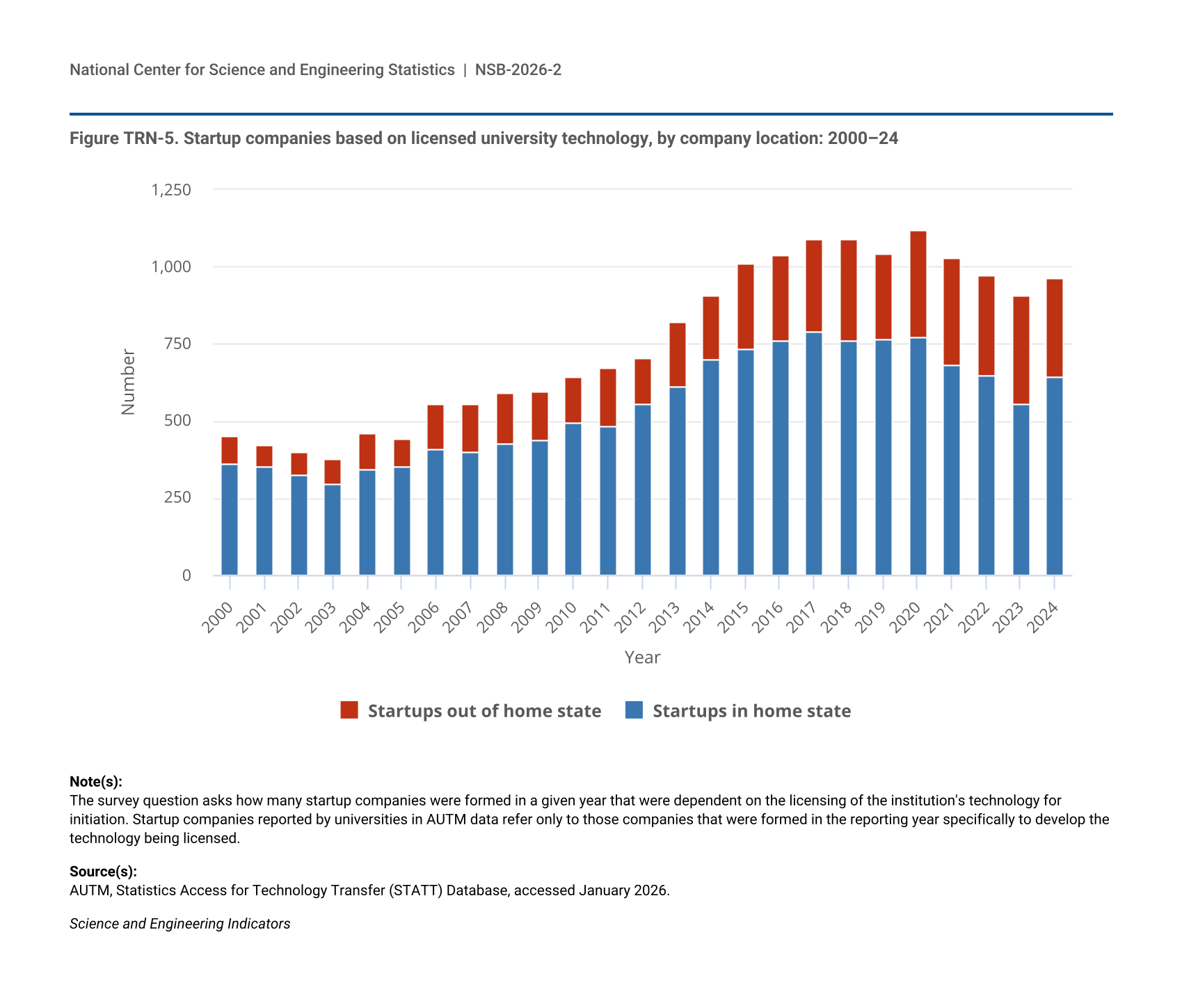
AUTM: An organization of technology transfer professionals working in universities, hospitals, and other research institutions. Among other advocacy activities, AUTM conducts a yearly survey of its members to compile information on licensing activity and other indicators of technology transfer (AUTM 2025).
Chemicals and chemical products, manufacture of: This industry includes the transformation of organic and inorganic raw materials by a chemical process and the formation of products.
Computer, electronic, and optical products, manufacture of: Includes the manufacture of computers, computer peripherals, communications equipment, and similar electronic products, as well as components such as electronic components and boards. The latter include resistors, microprocessors, and semiconductors. Also includes consumer electronics; measuring, testing, navigating, and control equipment; irradiation, electromedical, and electrotherapeutic equipment; optical instruments and equipment; and magnetic and optical media.
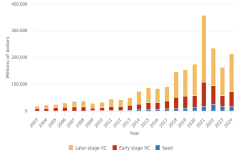
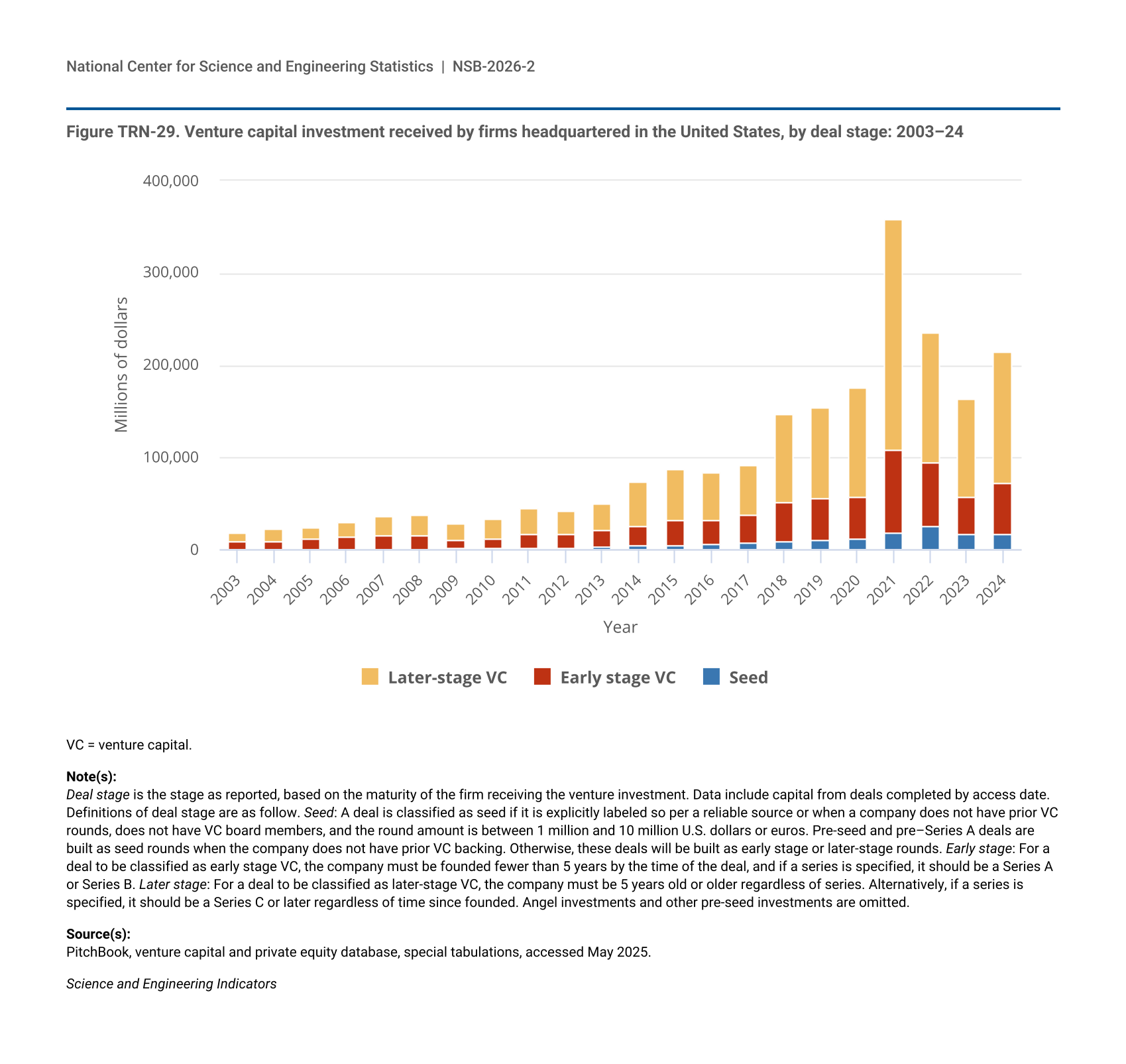
Early stage venture capital: Private equity investment in a nascent company before the generation of revenue.
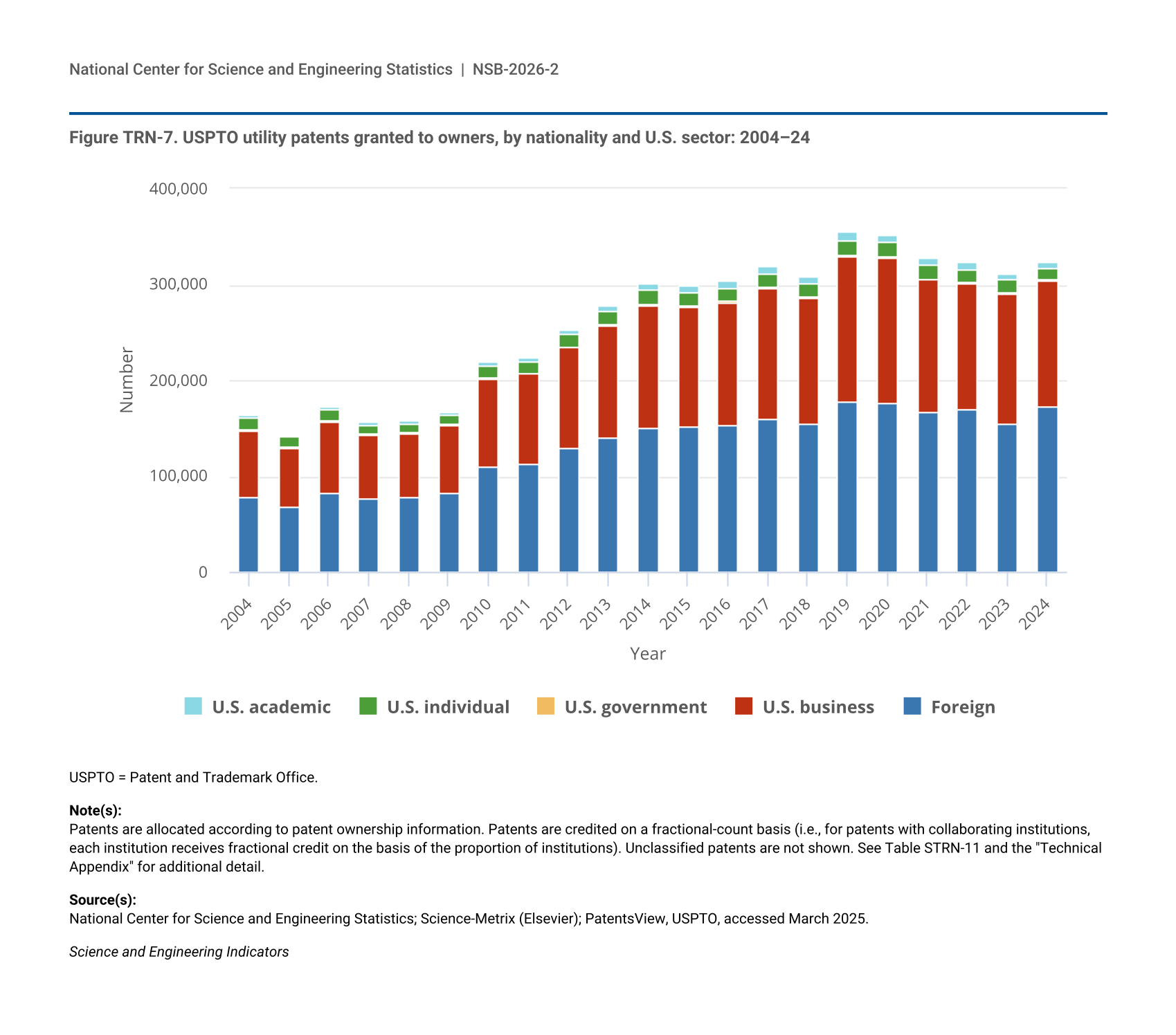
Economic sectors: Economic activity is organized in national economic accounts into four sectors: business, government, nonprofits serving households, and households. This organization has also been recommended for innovation statistics (OECD/Eurostat 2018). In the statistical data in this report, public universities and private nonprofit universities are shown together as academic institutions. The term individuals refers to the household economic sector.
Electrical equipment, manufacture of: This industry includes the manufacture of products that generate, distribute, and use electrical power, as well as electrical lighting, signaling equipment, and electric household appliances.
European Union (EU-27): The EU comprises 27 member nations: Austria, Belgium, Bulgaria, Croatia, Cyprus, Czechia, Denmark, Estonia, Finland, France, Germany, Greece, Hungary, Ireland, Italy, Latvia, Lithuania, Luxembourg, Malta, the Netherlands, Poland, Portugal, Romania, Slovakia, Slovenia, Spain, and Sweden. The United Kingdom withdrew from the EU on 1 February 2020. Unless otherwise noted, data on the EU include all 27 member countries.
General-purpose technology (GPT): GPTs are technologies that are widely used, are capable of ongoing technical improvement, and enable applications in other sectors (Bresnahan 2010).
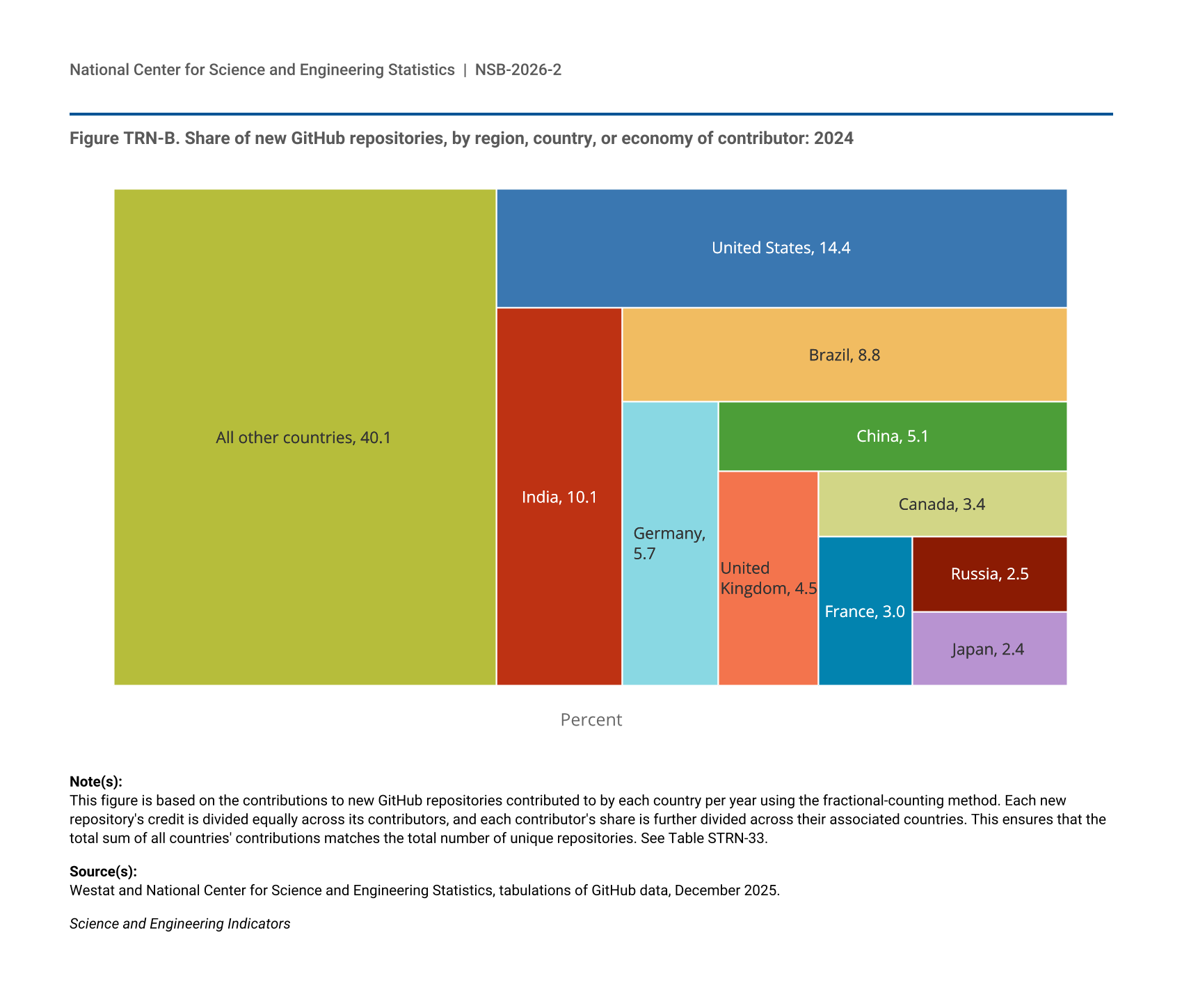
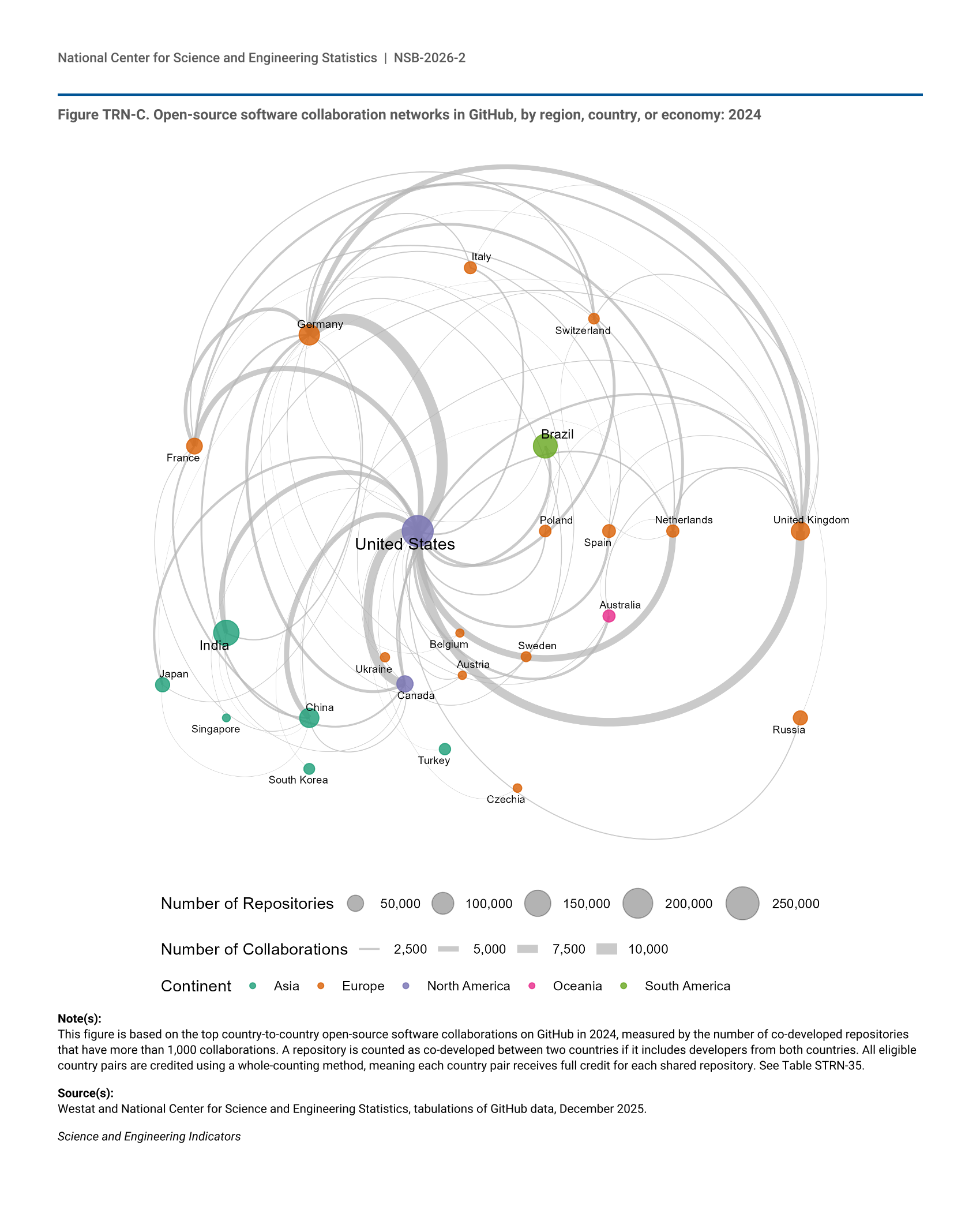
GitHub: A Web-based platform serving as a tool for software developers to implement the Git distributed version control system for software backup, sharing, and modification.
Global value chain (GVC): A chain of activities to produce goods and services that may extend across firms or countries. These activities include design, production, marketing and sales, logistics, and maintenance.
Gross domestic product (GDP): The market value of all final goods and services produced within a country in a given period.
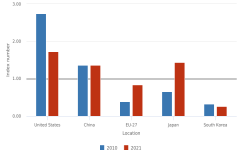
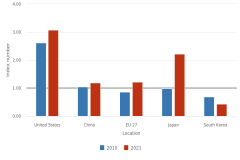
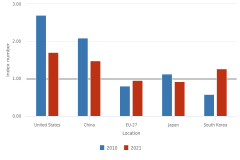
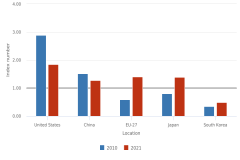
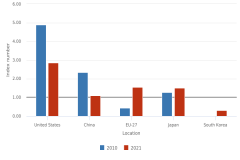
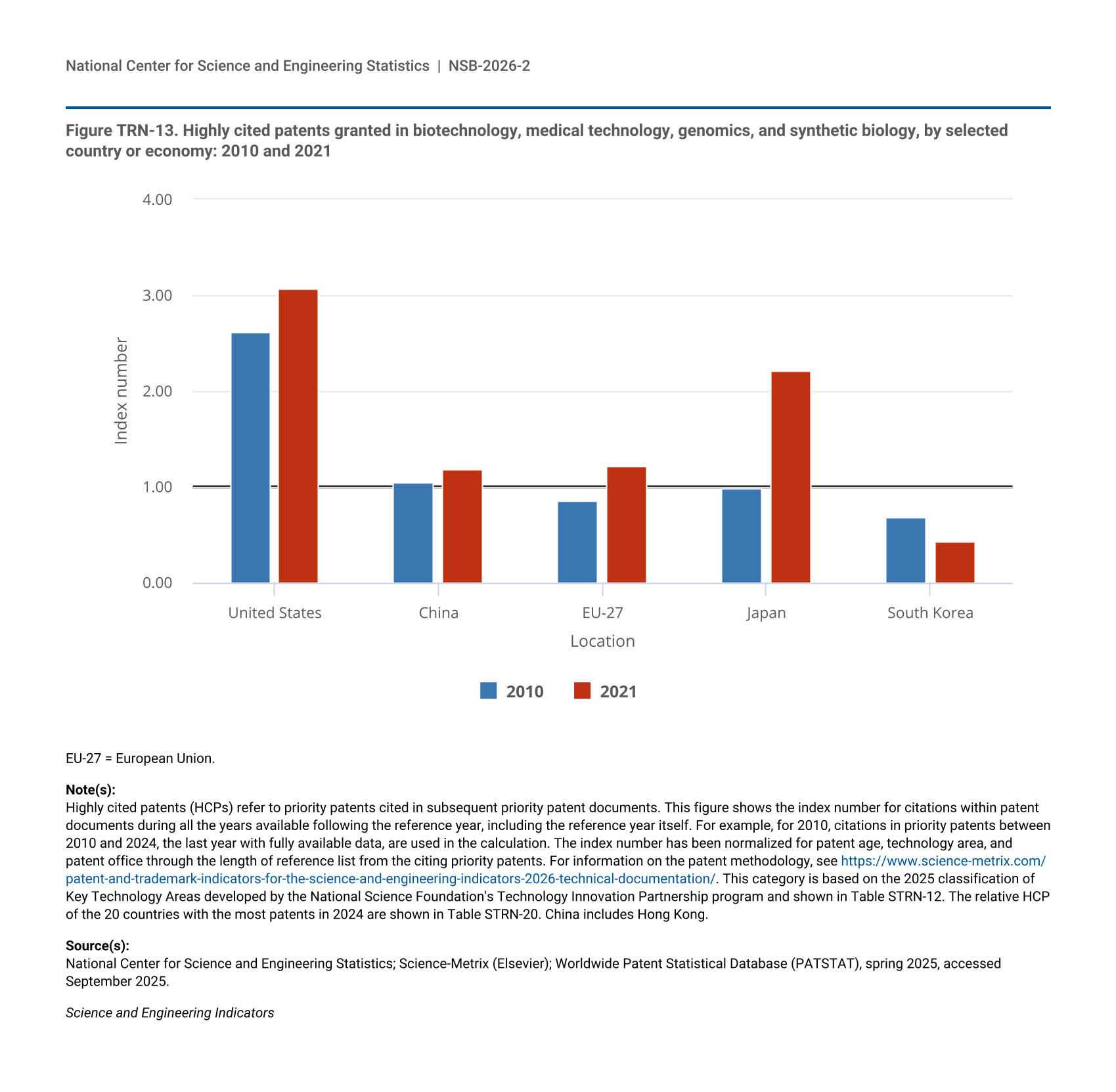
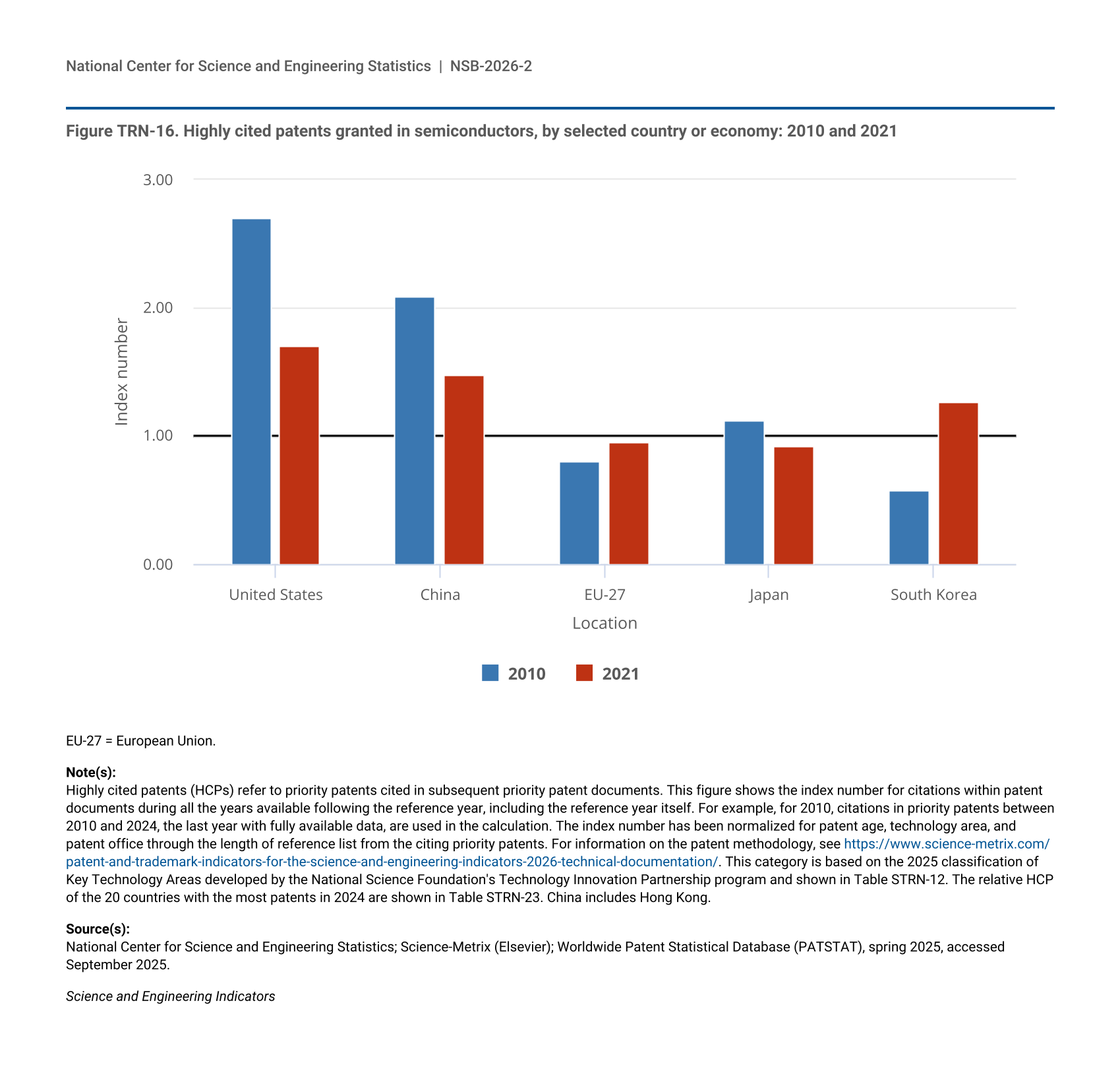
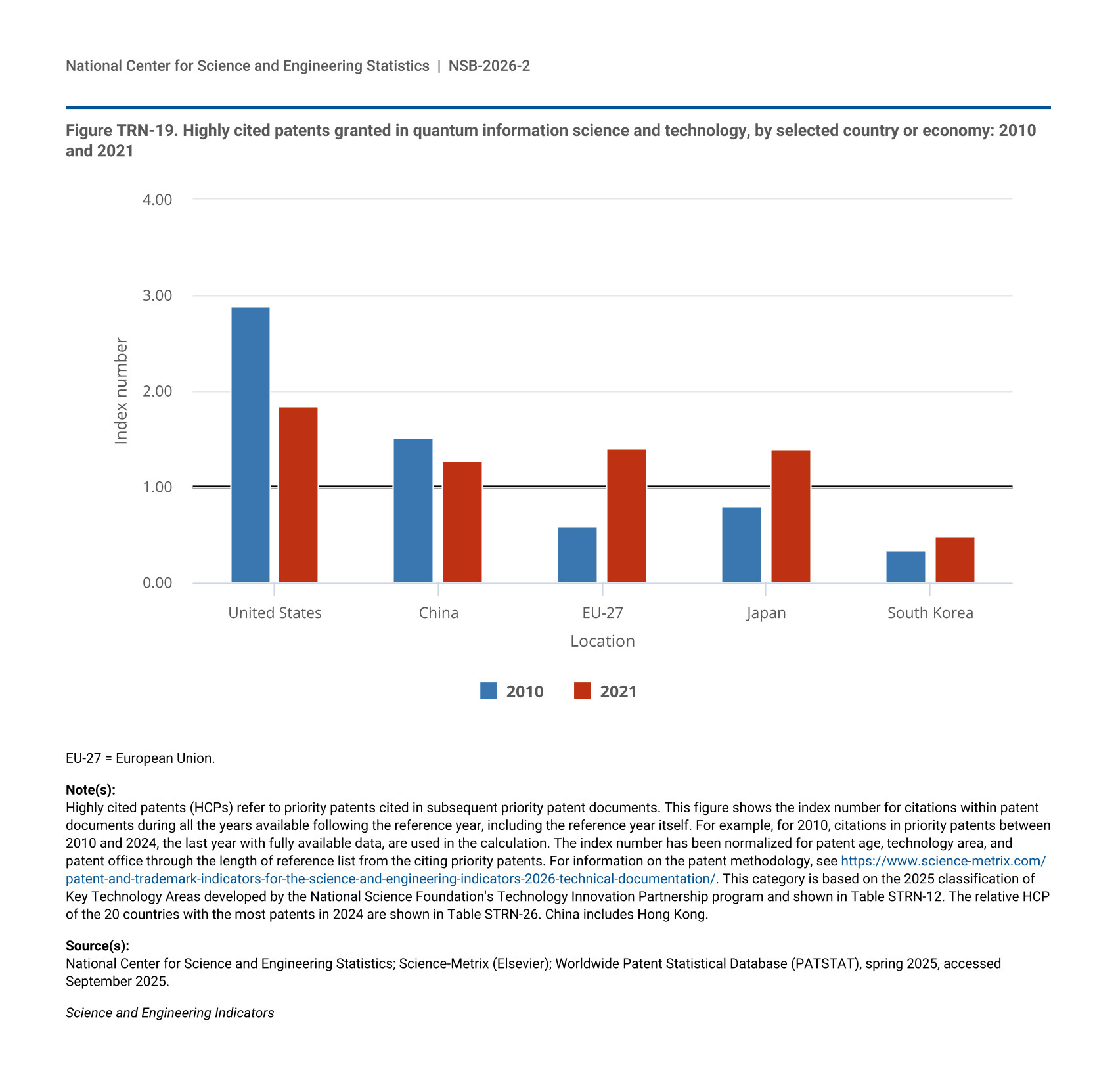
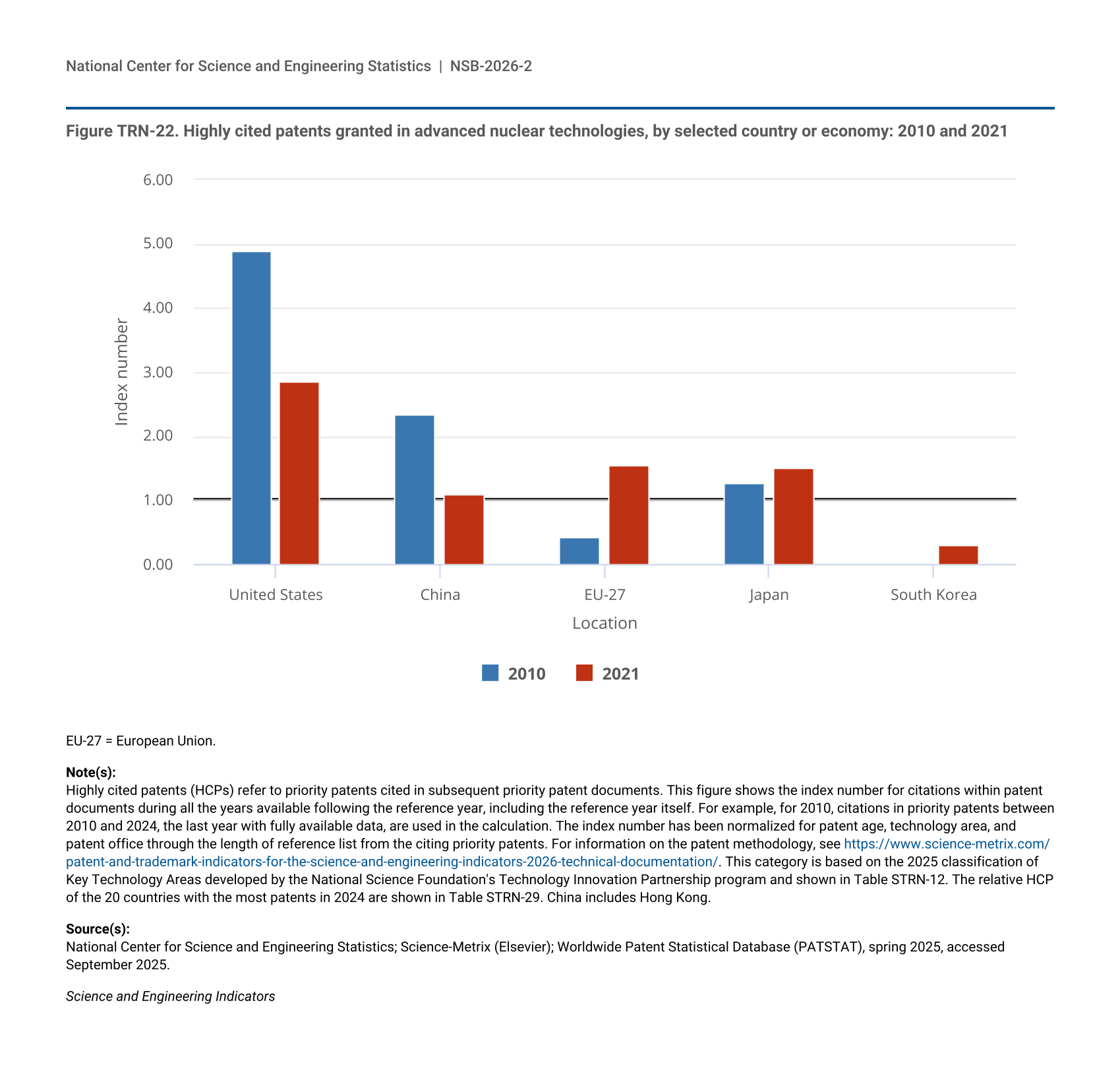
Highly cited patent (HCP): HCPs are patents that have received enough citations in subsequent patent documents such that they are in top 1% of cited patents in that category and year. The HCP share represents the share of an entity’s patents that are in the top 1% of all cited patents. For example, if 1% of artificial intelligence (AI) patents from the United States are in the top 1% of AI patents globally, then the HCP share for the United States is 1.0. If the HCP share for a location is 2.0, then 2 % of that location’s patents are in the top 1% globally, implying higher impact patents.
Information sector: As defined by the North American Industry Classification System (NAICS), this industry sector engaged in (1) producing and distributing information and cultural products, (2) providing the means to transmit or distribute these products as well as data or communications, and (3) processing data.
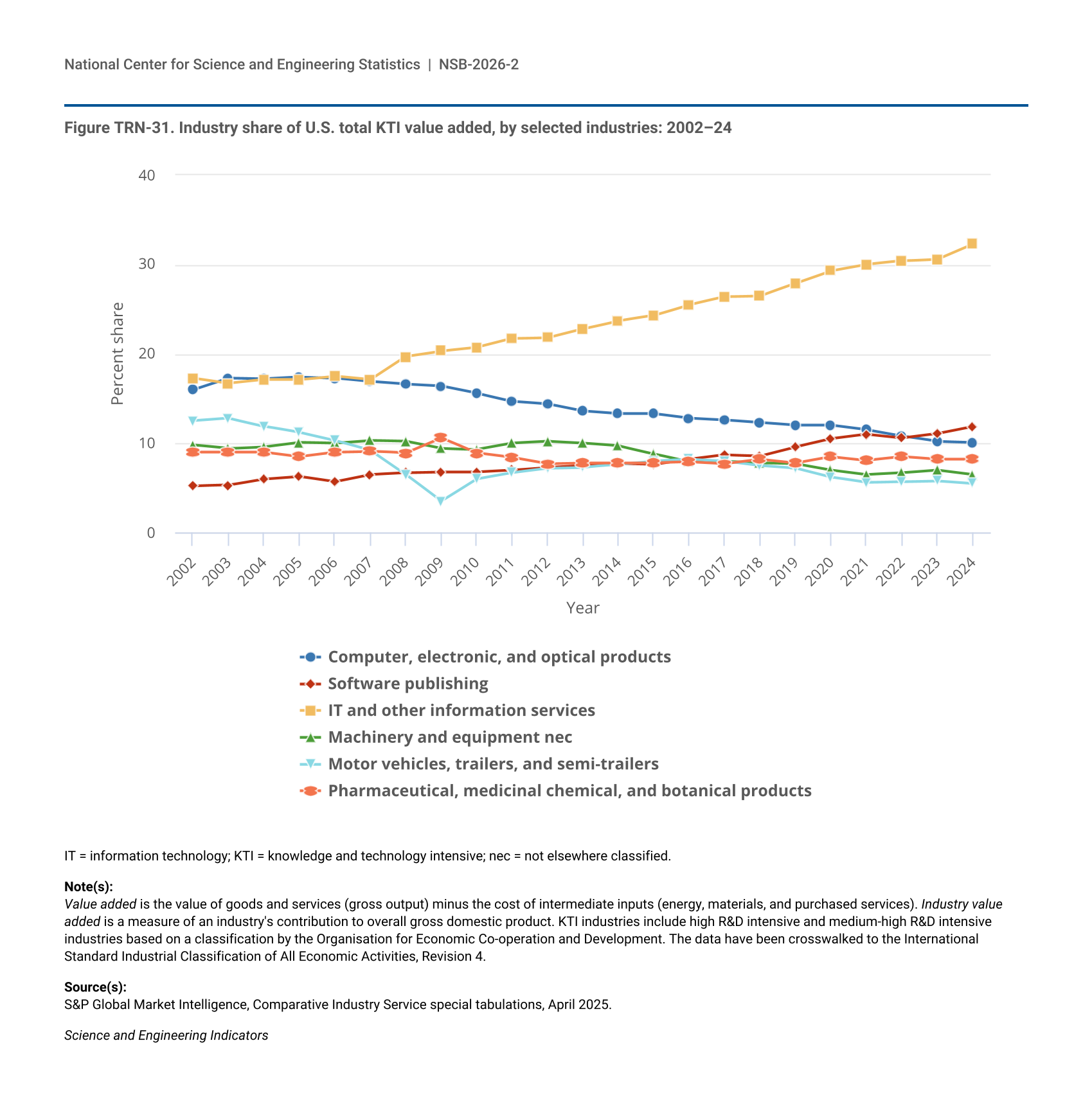
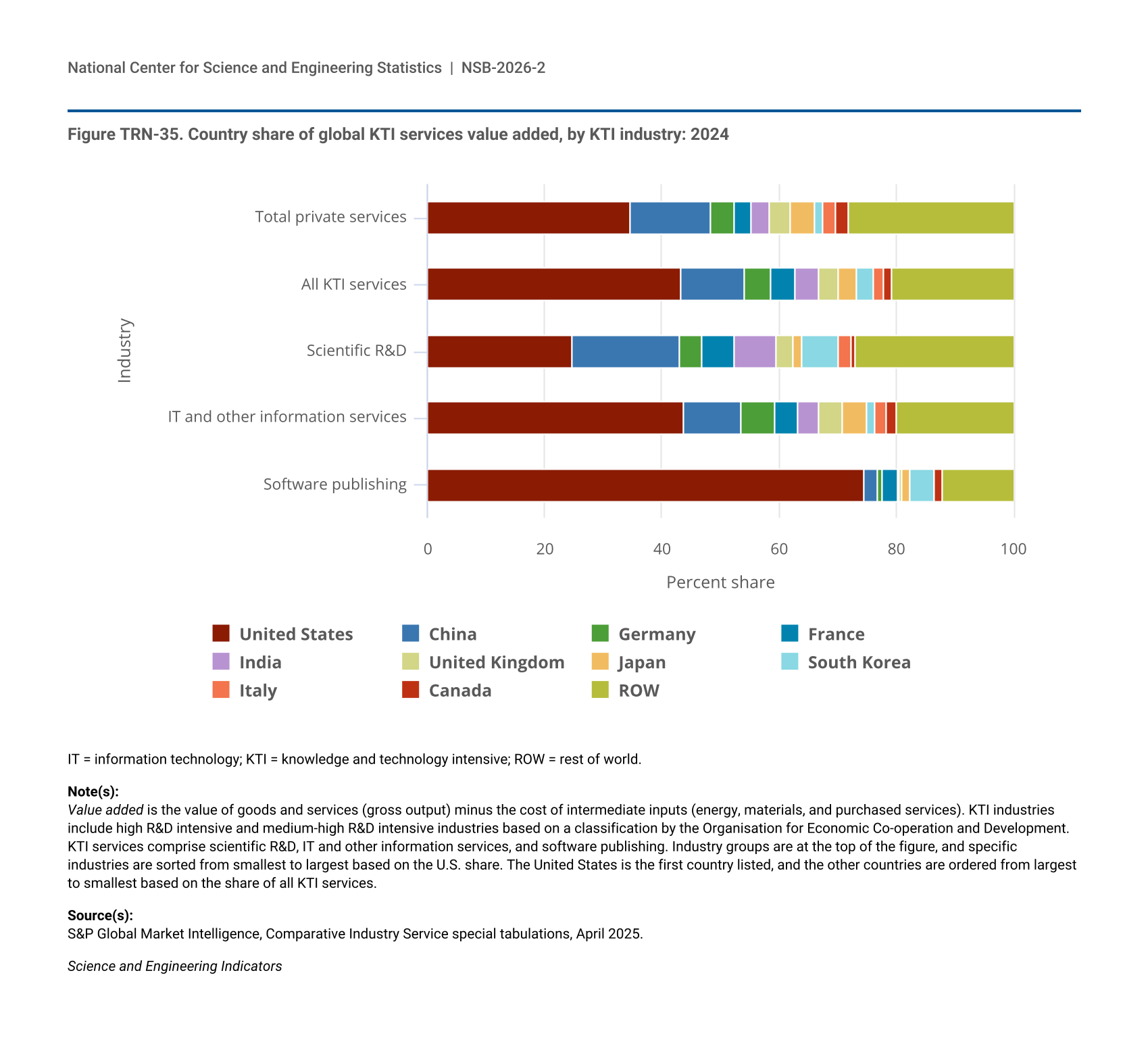
Information technology (IT) and other information services: This industry is the composite of International Standard Industrial Classification of All Economic Activities (ISIC) sectors 62 (computer programming, consultancy, and related activities) and 63 (information service activities). ISIC 62 includes providing expertise in information technologies: writing, modifying, testing, and supporting software; planning and designing computer systems that integrate computer hardware, software, and communication technologies; and on-site management and operation of clients’ computer systems or data processing facilities. ISIC 63 includes Web search portals and data processing and hosting activities.
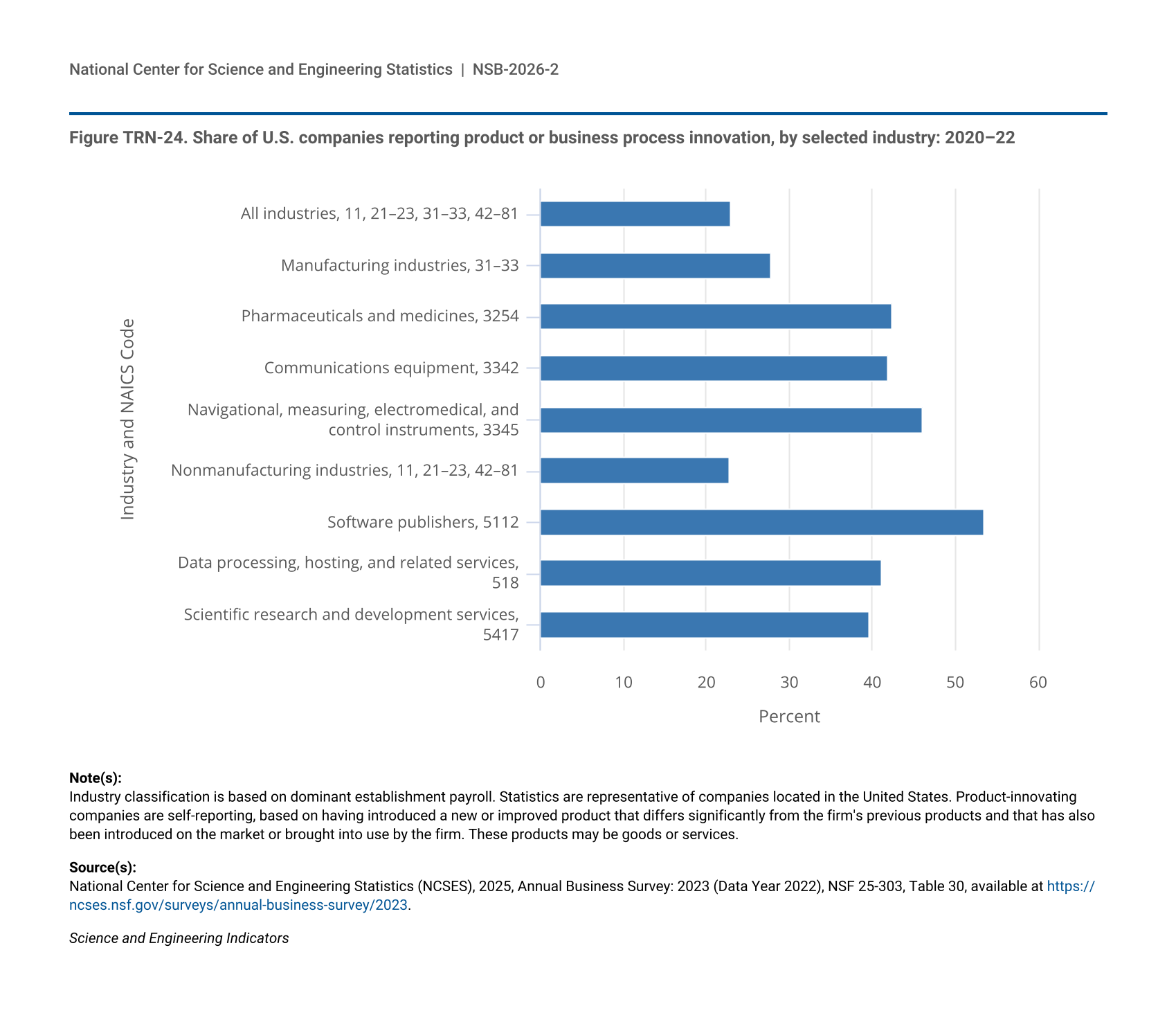
Innovation: A new or improved product or process (or combination thereof) that differs significantly from the unit’s previous products or processes and that has been made available to potential users (product) or brought into use by the unit (process). The unit is a generic term to describe the actor responsible for innovations. It refers to any institutional unit in any sector, including households and their individual members, according to the Oslo Manual 2018 (OECD/Eurostat 2018).
Intangible or intellectual property product (IPP): IPPs are the result of R&D or innovation leading to knowledge that the developers can market or use to their own benefit in production because use of the knowledge is restricted by means of legal or other protection. They include R&D; mineral exploration and evaluation; computer software and databases; and entertainment, literary and artistic originals, and other IPPs.
Intellectual property (IP): Creations of the mind including inventions; literary and artistic works; and symbols, names, images, and designs used in commerce. Industrial IP includes patents, utility models, trademarks, and industrial designs. IP covered by copyright includes literary, artistic, and musical works (WIPO 2020).
Invention: Any new and useful process, machine, manufacture, or composition of matter or any new and useful improvement thereof (USPTO 2020).
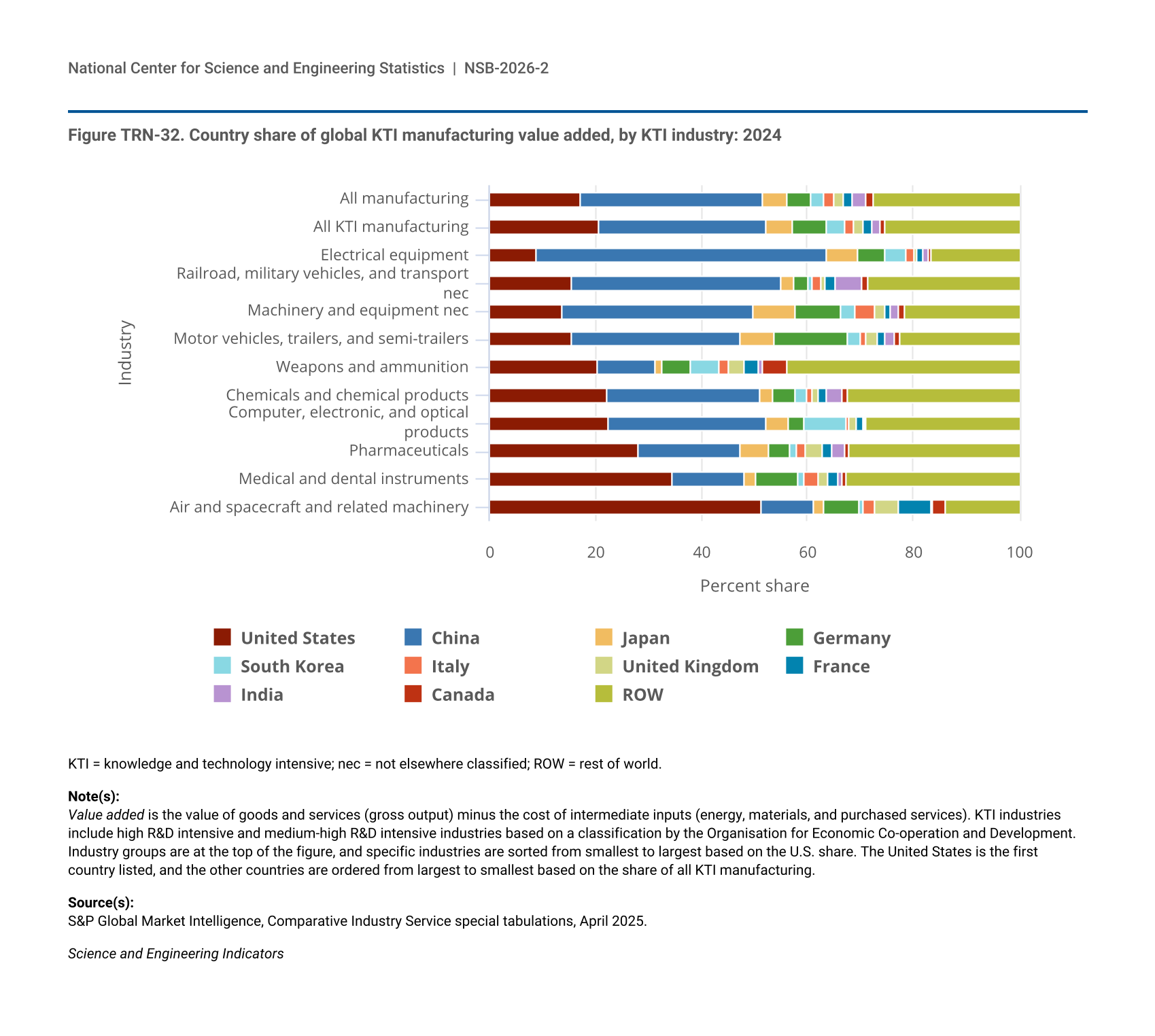
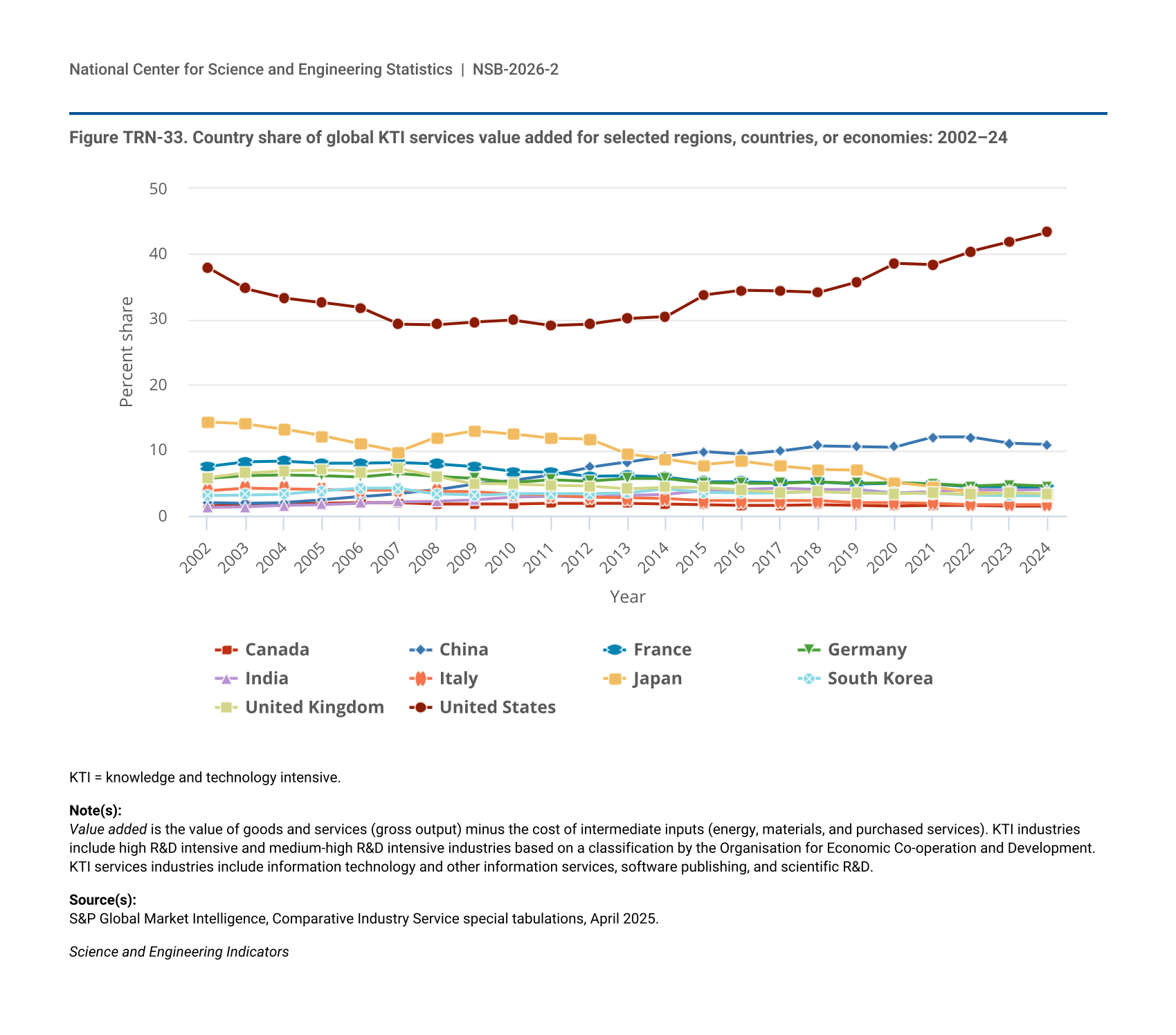
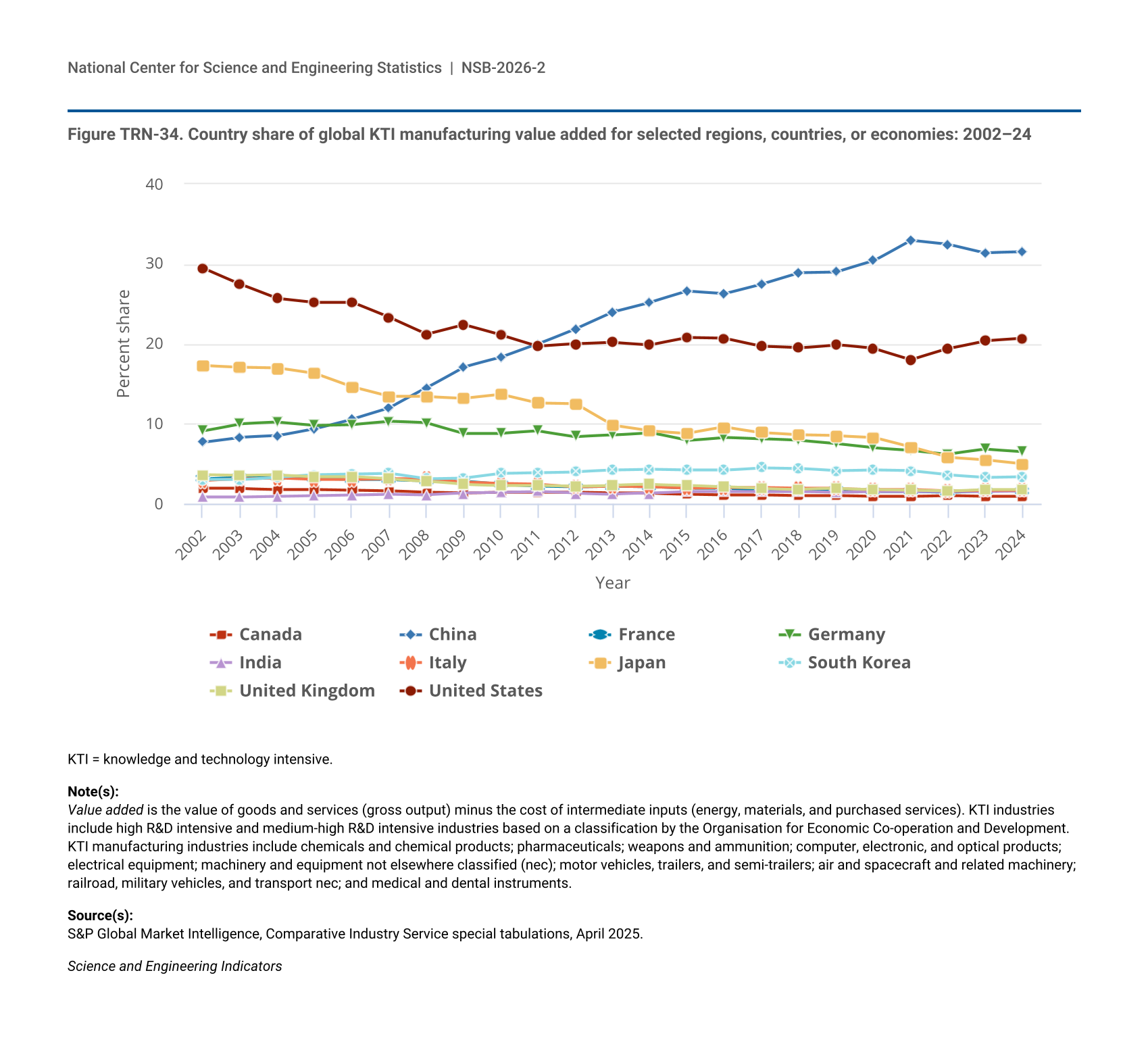
Knowledge- and technology-intensive (KTI) industries: Industries classified by the Organisation for Economic Co-operation and Development (OECD) as high and medium-high R&D-intensive industries. OECD defines industry R&D intensity as the ratio of an industry’s business R&D expenditures to its value added (OECD 2016).
Knowledge transfer: The process by which technology or knowledge developed in one place or for one purpose is applied and used in another place for the same or a different purpose. This transfer can occur freely or through exchange and be deliberate or unintentional. Technology transfer represents a specific case of knowledge transfer that involves the transfer of knowledge embedded in technology.
Machinery and equipment not elsewhere classified (nec), manufacture of: This industry includes the manufacture of machinery and equipment that act independently on materials either mechanically or thermally or perform operations on materials (such as handling, spraying, weighing, or packing). Includes the manufacture of fixed and mobile or handheld devices, regardless of whether they are designed for industrial, building, and civil engineering; agricultural; or home use. Also included is the manufacture of special equipment for passenger or freight transport within demarcated premises.
Medical and dental instruments and supplies, manufacture of: Includes manufacture of laboratory apparatus, surgical and medical instruments, surgical appliances and supplies, dental equipment and supplies, orthodontic goods, and dentures and orthodontic appliances.
Motor vehicles, trailers, and semi-trailers, manufacture of: This industry includes the manufacture of motor vehicles for transporting passengers or freight. Also included is the manufacture of parts and accessories and of trailers and semi-trailers.
Organisation for Economic Co-operation and Development (OECD): An international organization of 38 countries headquartered in Paris, France. The member countries are Australia, Austria, Belgium, Canada, Chile, Colombia, Costa Rica, Czechia, Denmark, Estonia, Finland, France, Germany, Greece, Hungary, Iceland, Ireland, Israel, Italy, Japan, Latvia, Lithuania, Luxembourg, Mexico, the Netherlands, New Zealand, Norway, Poland, Portugal, Slovakia, Slovenia, South Korea, Spain, Sweden, Switzerland, Türkiye, the United Kingdom, and the United States. Among its many activities, OECD compiles social, economic, and science and technology statistics for all member and selected nonmember countries.
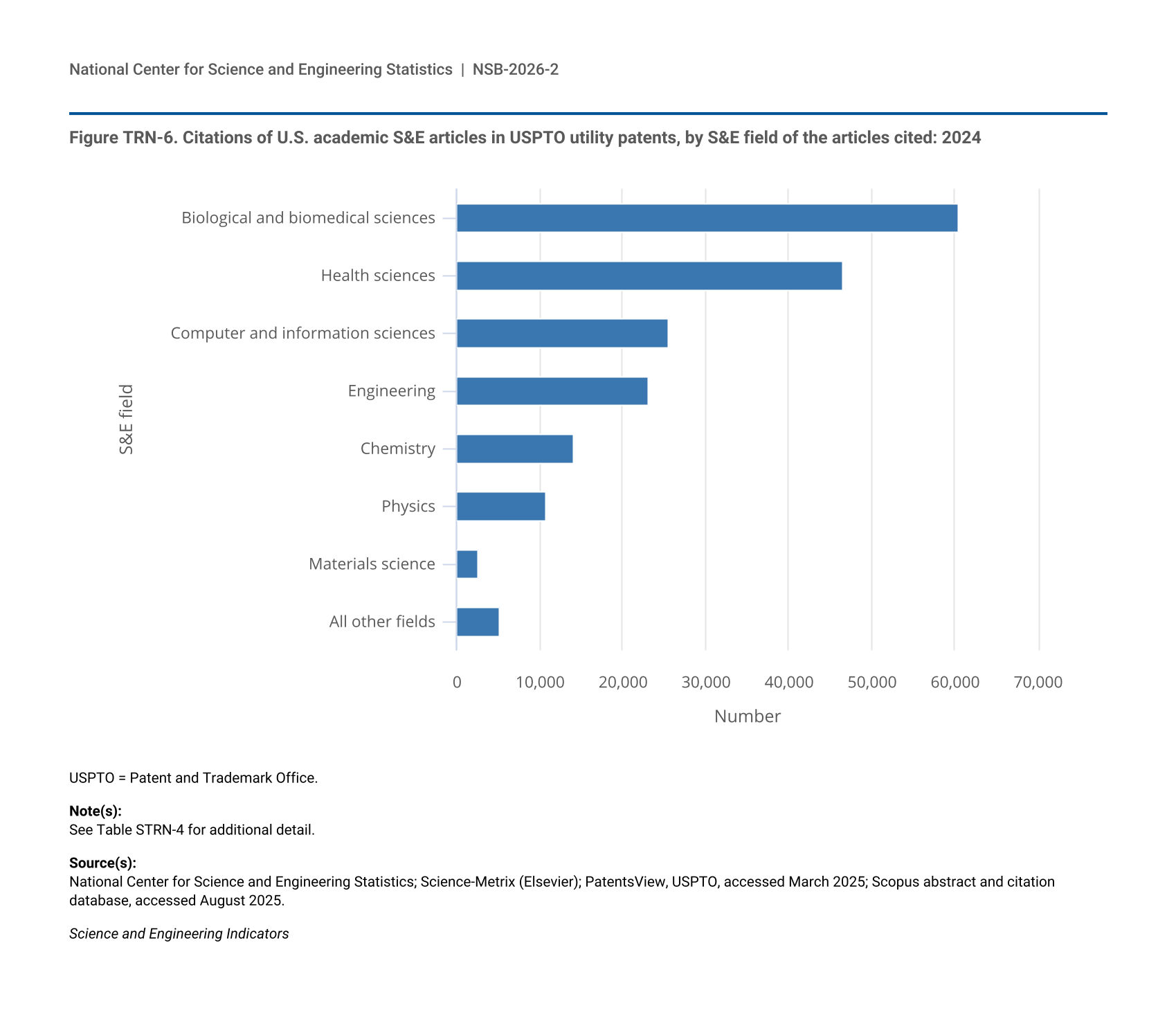
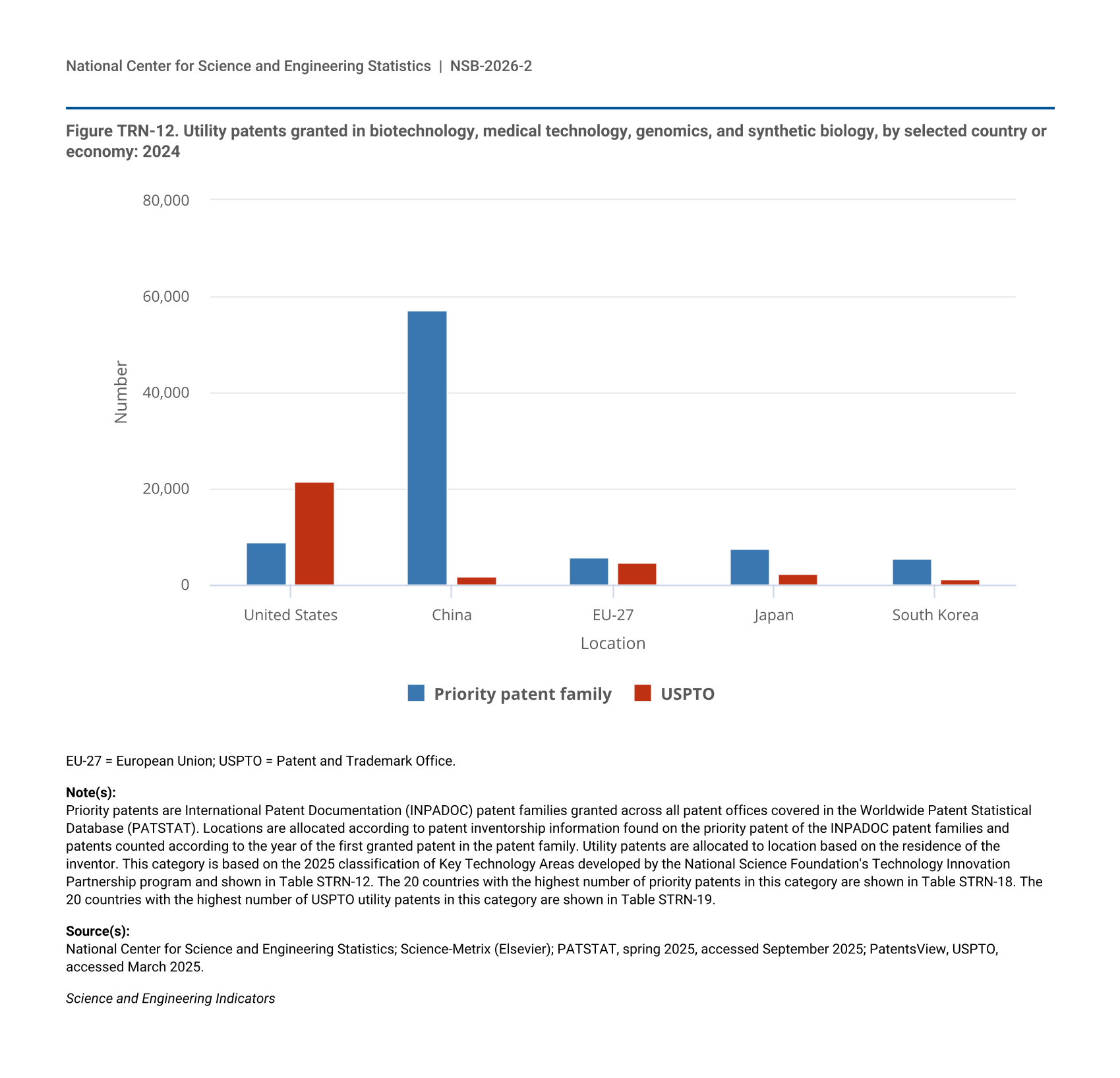
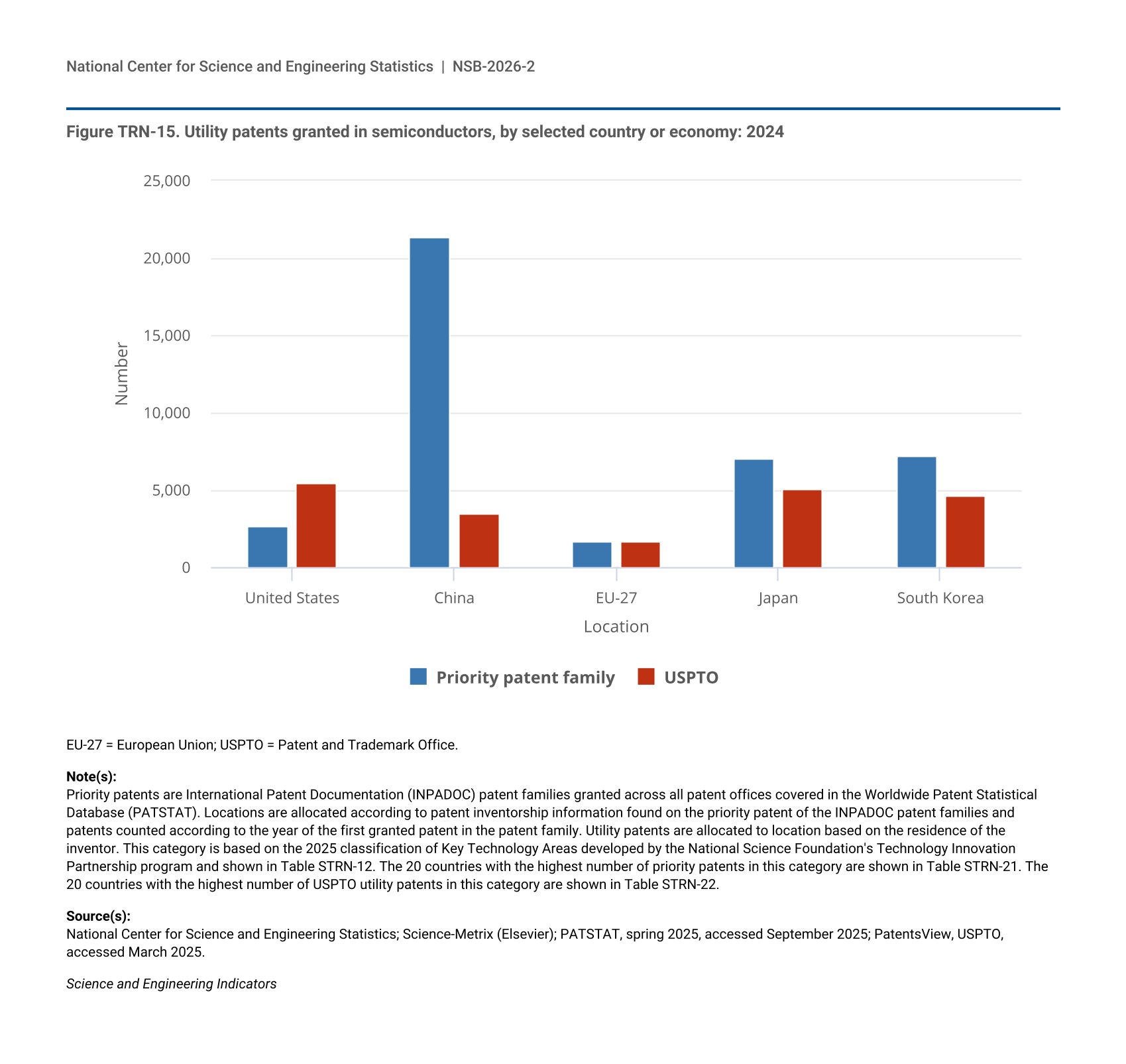
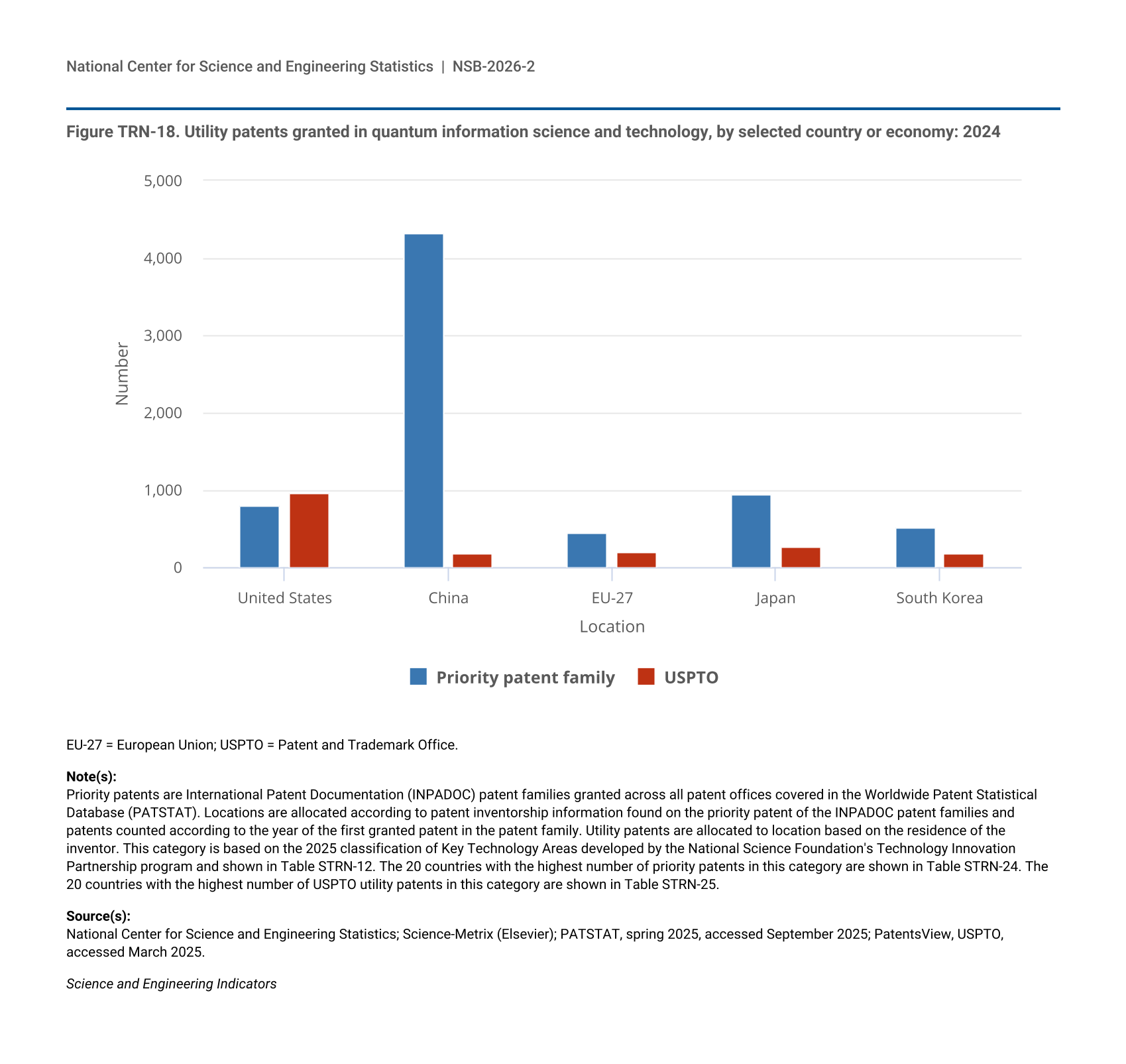
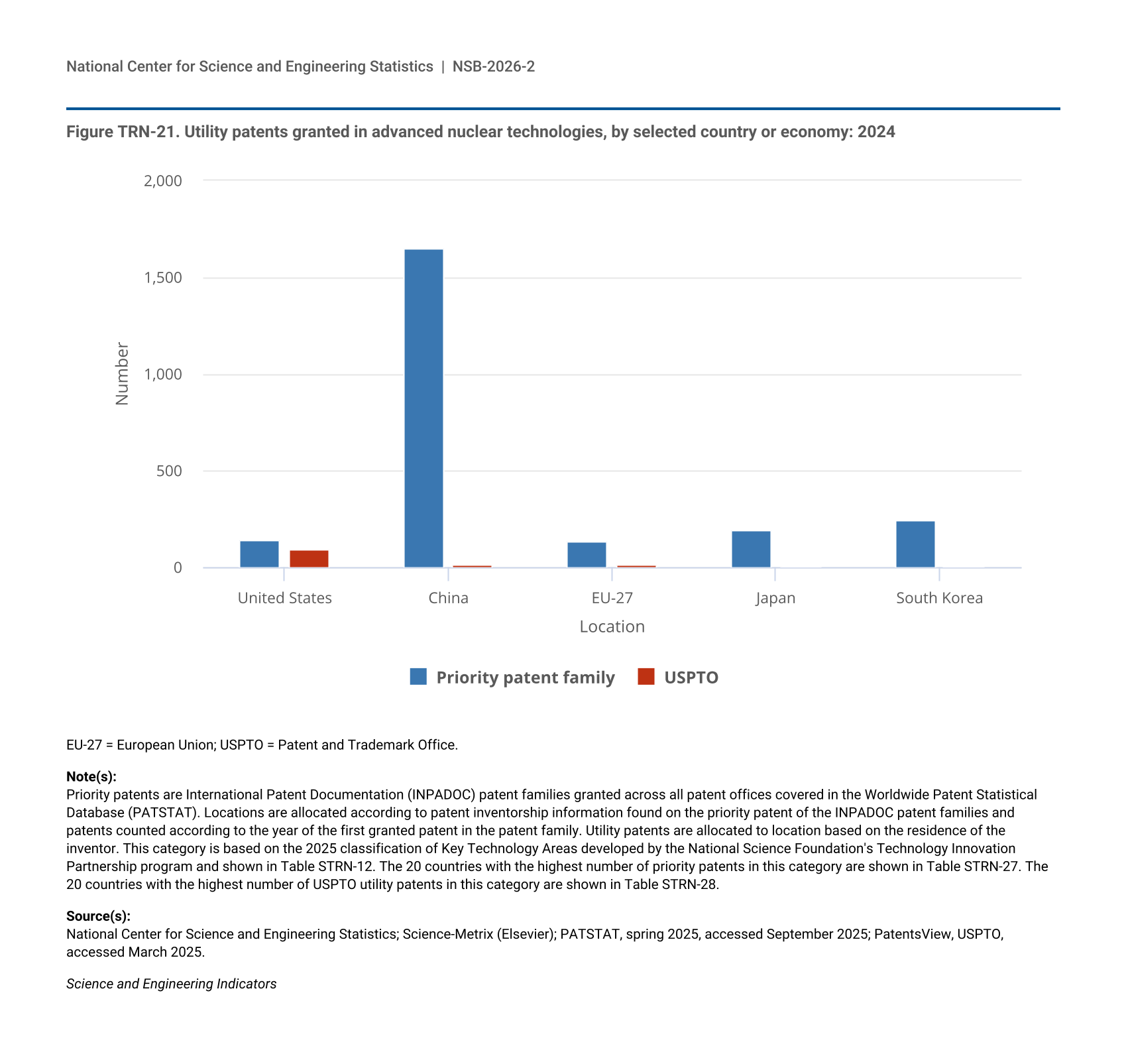
Patent and Trademark Office (USPTO) patent: As defined by USPTO, a property right granted by the U.S. government to an inventor “to exclude others from making, using, offering for sale, or selling the invention throughout the United States or importing the invention into the United States” for a limited time in exchange for public disclosure of the invention when the patent is granted (USPTO 2025a).
Patenting intensity: Number of patents per population in a geographic location.
PatentsView: Patent database of USPTO patents used in this report.
PATSTAT: Patent database from the European Patent Office that is the source of the priority patent family data in this report.
Pharmaceuticals (manufacture of basic pharmaceutical products and pharmaceutical preparations): This industry includes the manufacture of basic pharmaceutical products, pharmaceutical preparations, and medicinal chemical and botanical products.
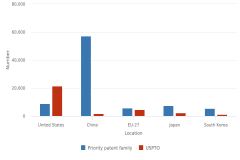
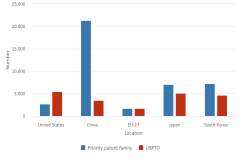
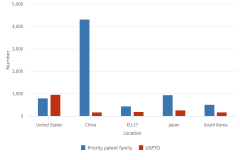
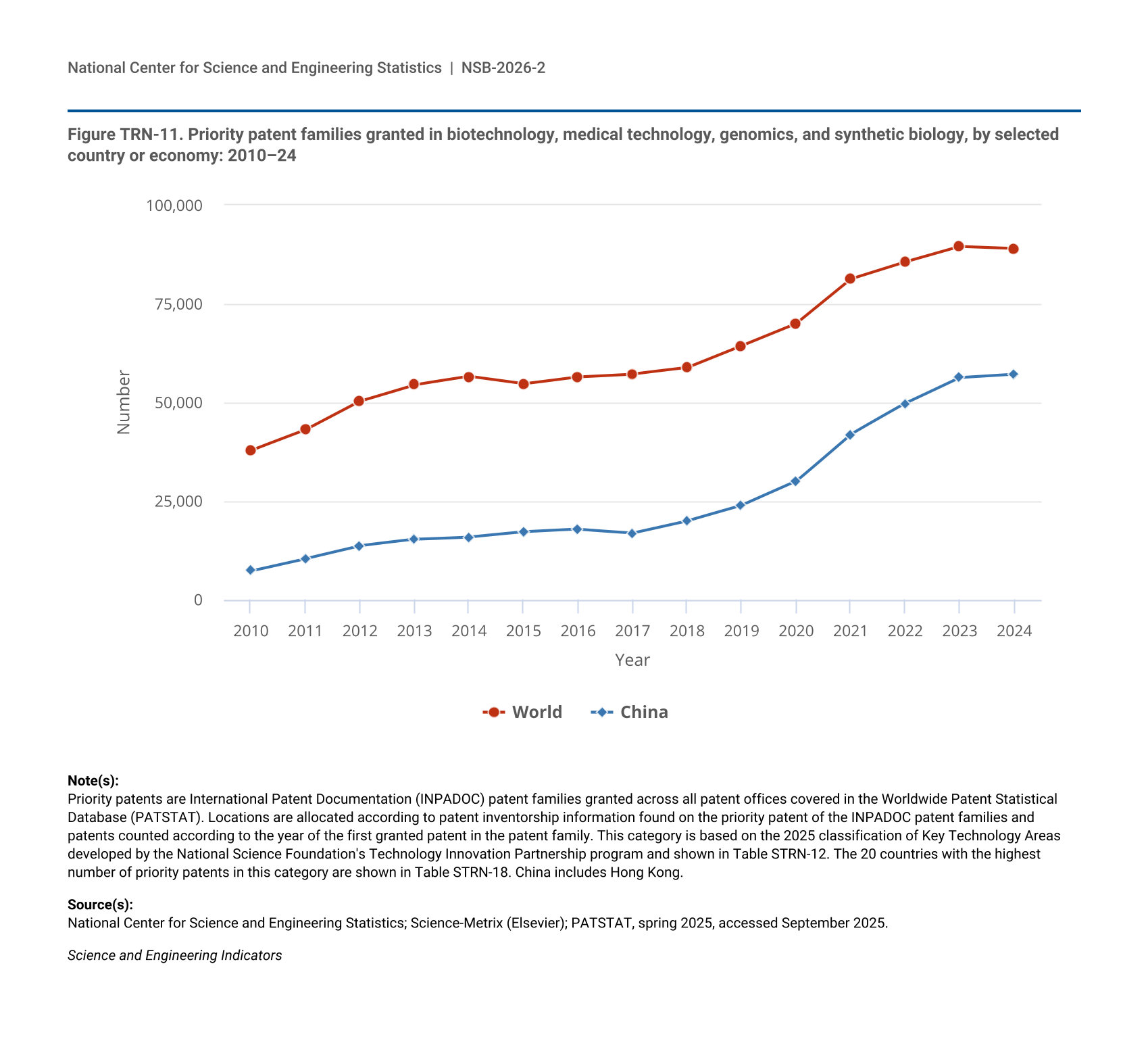
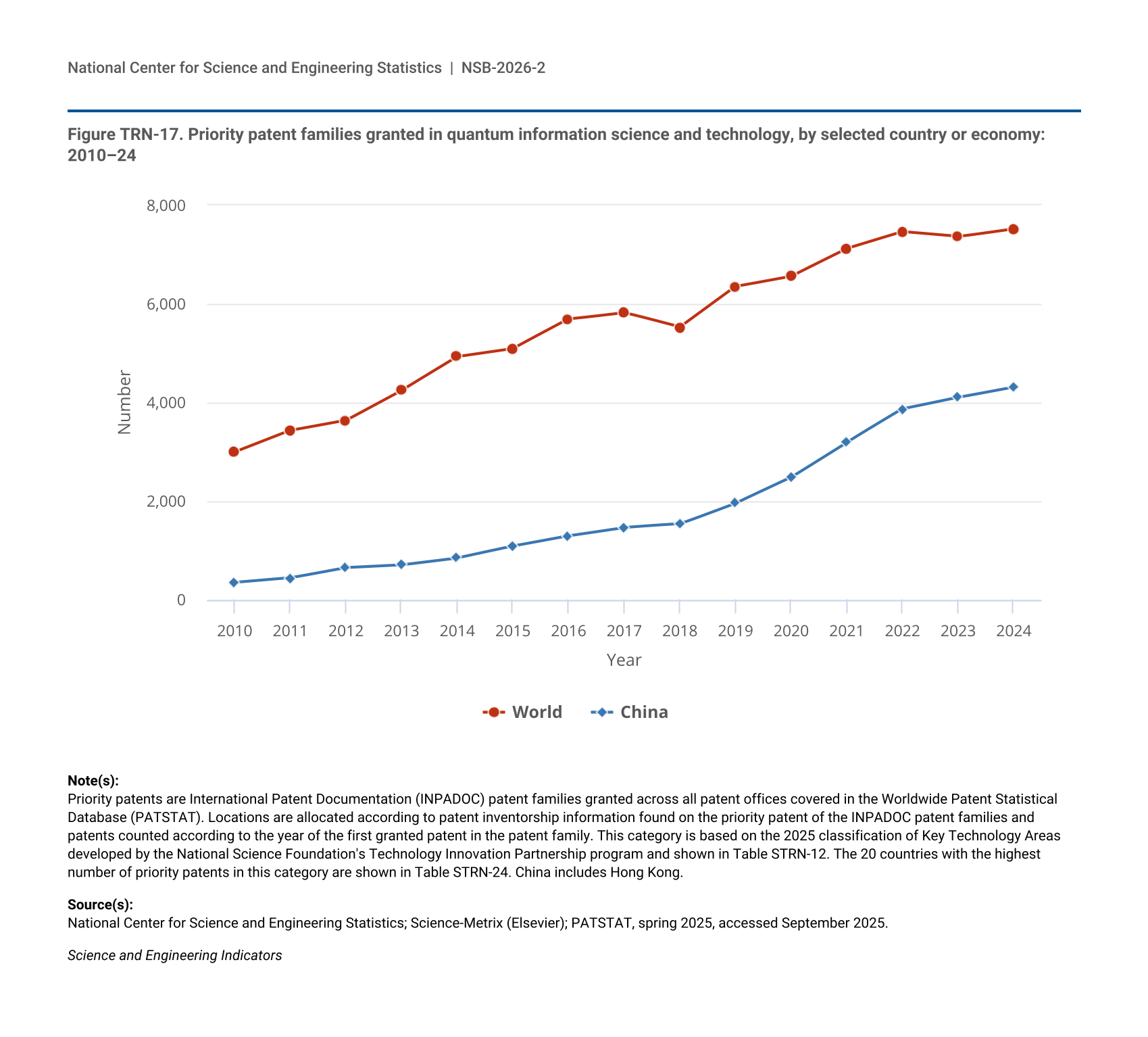
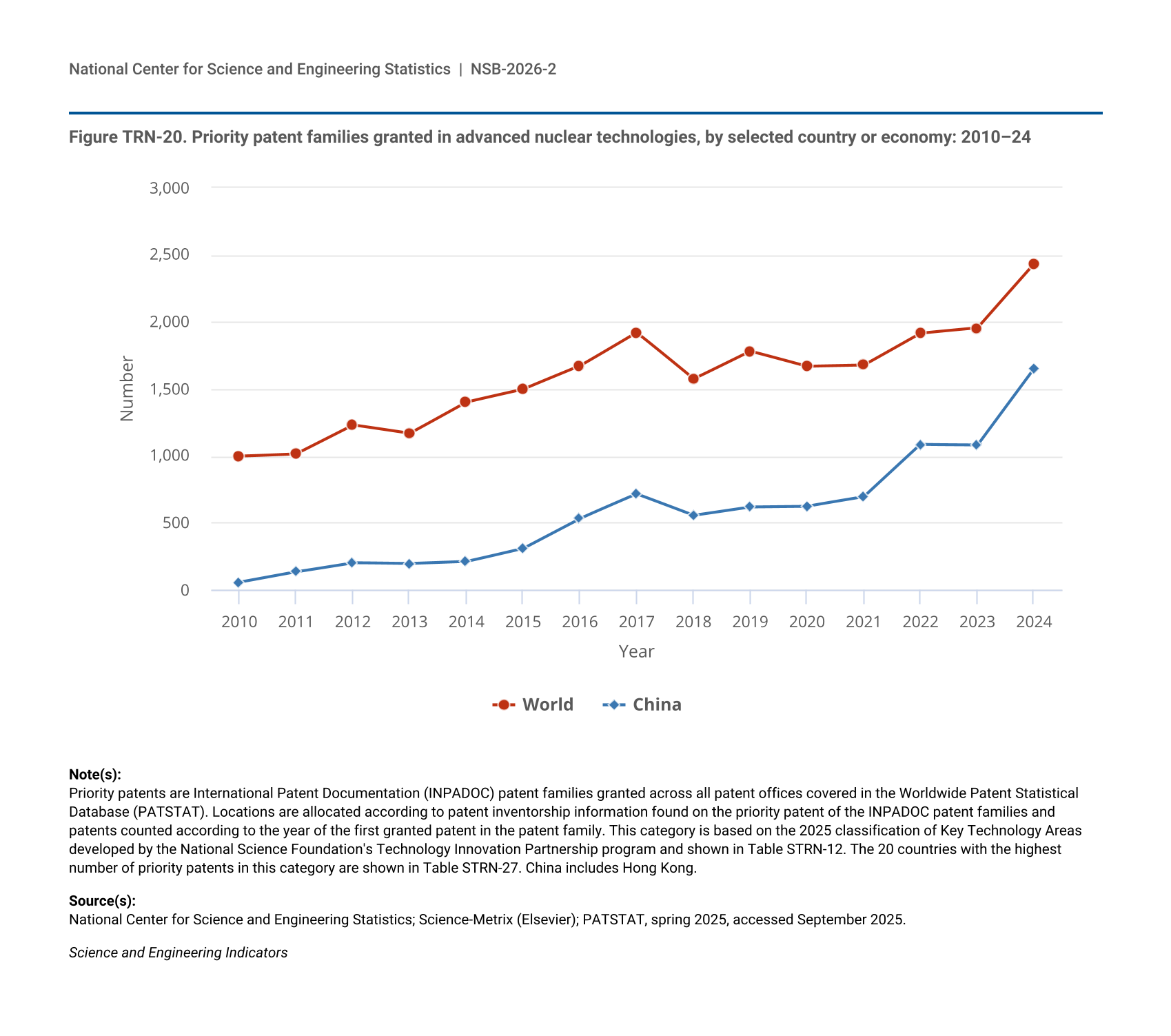
Priority patent: The first patent filed in a family of subsequent patents. Counting priority patent families allows each patented innovation to be counted once, based on the first filing. The original filing may be domestic or from another jurisdiction.
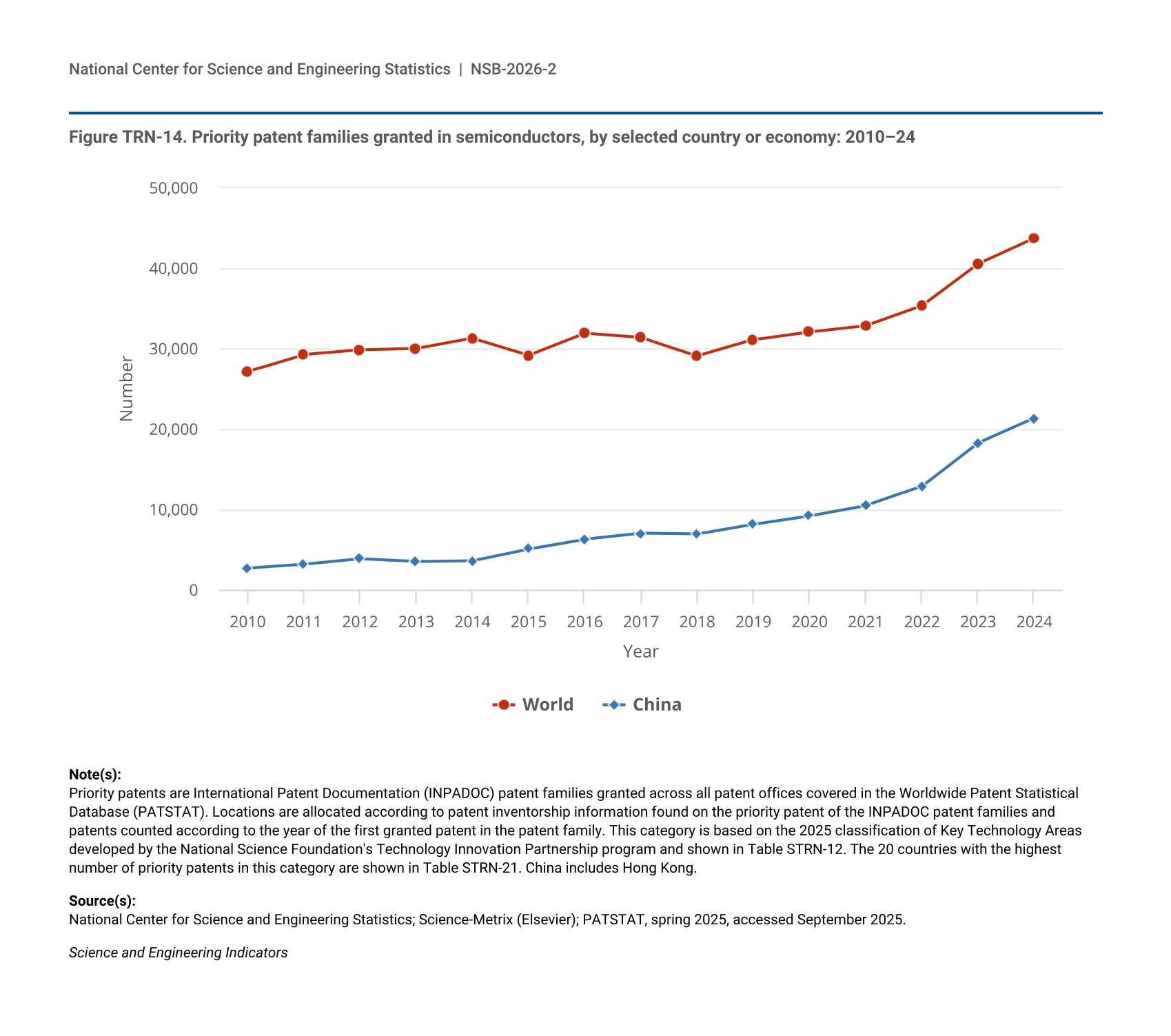
Priority patent families: These are original patents that have been issued by any international jurisdiction, adjusted to count only the first issuance of a series or family of related patents. The unit of measurement is a patent family that shares a single original invention in common. All subsequent patents in a family refer to the first patent filed, or priority patent, and the indicator provides an unduplicated count of original or priority patents in any individual jurisdiction. The data used in this report are from the European Patent Office’s PATSTAT database.
Quantum information science and technology (QIST): A set of technologies based on the principles of “quantum physics for the storage, transmission, manipulation, computing, or measurement of information,” according to the National Quantum Initiative Act (P.L. 115-368). QIST can perform certain operations faster than conventional computers and may have application in areas such as cryptography, modeling, and simulation.
Railroad, military vehicles, and transport not elsewhere classified (nec), manufacture of: This manufacturing industry is the composite of International Standard Industrial Classification of All Economic Activities (ISIC) 302 (railway locomotives and rolling stock), ISIC 304 (military fighting vehicles), and ISIC 309 (transport equipment nec).
Repository: In GitHub, a repository is a virtual storage space where computer code and files are stored, along with the history of commits, or changes to the file.
Scientific research and development (R&D) services: This industry includes the activities of three types of R&D: (1) basic research, (2) applied research, and (3) experimental development.
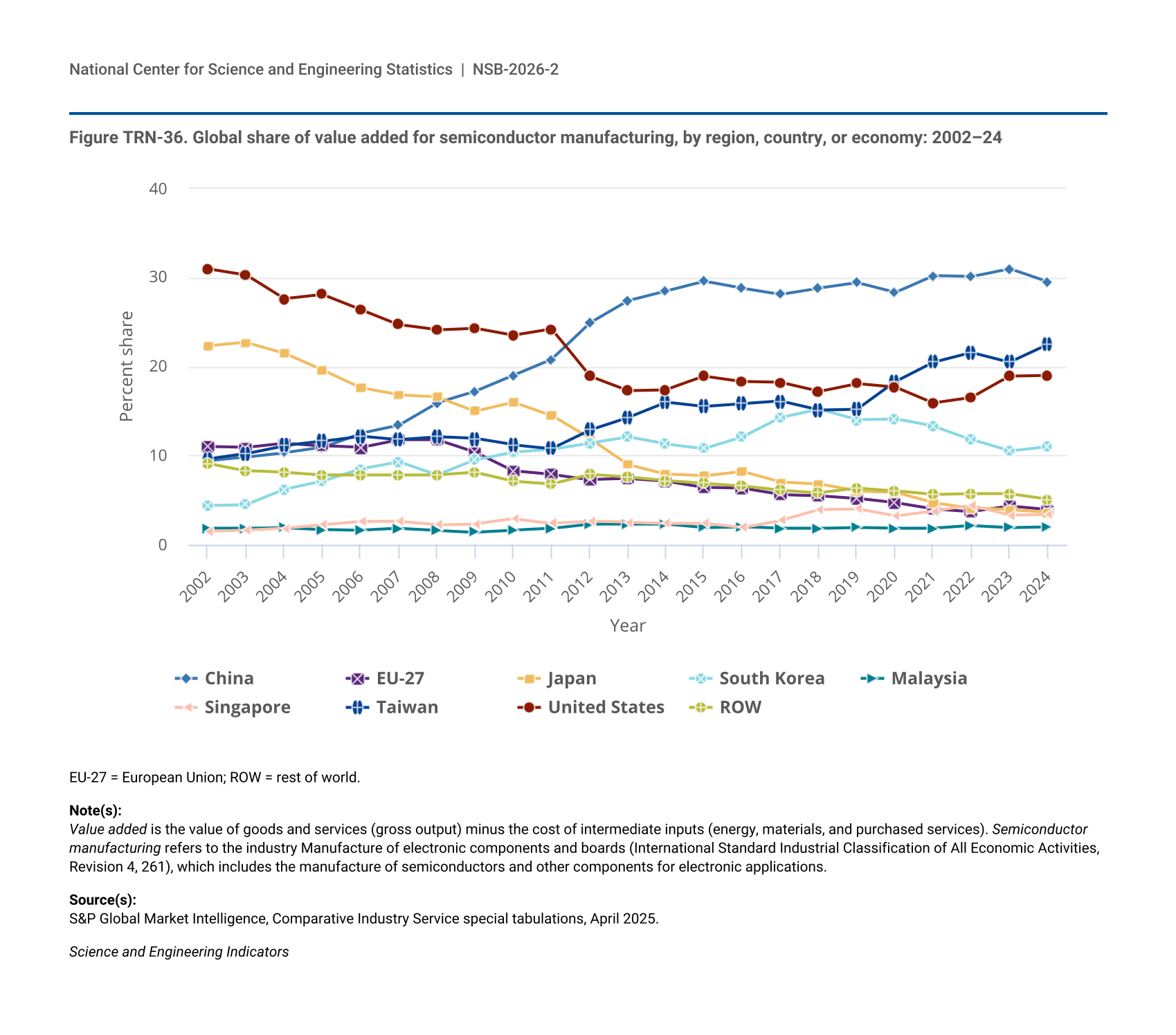
Semiconductors: This industry refers to the manufacture of electronic components and boards (International Standard Industrial Classification of All Economic Activities 261), which includes semiconductors and other components for electronic applications.
Software publishing: This industry includes publication of ready-made (noncustomized) software: operating systems, business and other applications, and computer games for all platforms.
Technical field in patents: Chemistry: Biotechnology, pharmaceuticals, organic fine chemistry, microstructural and nanotechnology, chemical engineering, macromolecular chemistry and polymers, basic materials chemistry, materials, metallurgy, surface technology, coating, environmental technology, food chemistry. Electrical engineering: Computer technology, electrical machinery, apparatus and energy, semiconductors, digital communication, telecommunications, audio-visual technology, basic communication processes, information technology methods for management. Mechanical engineering: Other special machines, engines, pumps, and turbines; transport; mechanical elements; machine tools; textile and paper machines; thermal processes and apparatus; handling. Instruments: Medical technology, measurement, analysis of biological materials, optics, control. Other categories: Civil engineering, other consumer goods, furniture, games.
Technology transfer: The process by which technology or knowledge developed in one place or for one purpose is applied and exploited in another place or for another purpose. In the federal setting, technology transfer is the process by which existing knowledge, facilities, or capabilities developed under federal research and development funding are used to fulfill public and private needs.
Total private services: Aggregate of the following International Standard Industrial Classification of All Economic Activities (ISIC) industries (ISIC Revision 4): wholesale and retail trade and repair of motor vehicles and motorcycles; transportation and storage; accommodation and food service activities; information and communication; financial and insurance activities; real estate activities; professional, scientific, technical activities; and administrative and support service activities. This aggregate corresponds to Business Sector Services (ISIC aggregate “D45T82”) in economic and R&D data from the Organisation for Economic Co-operation and Development (OECD 2025b).
Trade secret: Information that fulfills all the following requirements, as defined by the Patent and Trademark Office: “Either actual or potential independent economic value by virtue of not being generally known, has value to others who cannot legitimately obtain the information, and is subject to reasonable efforts to maintain its secrecy” (USPTO 2025c).
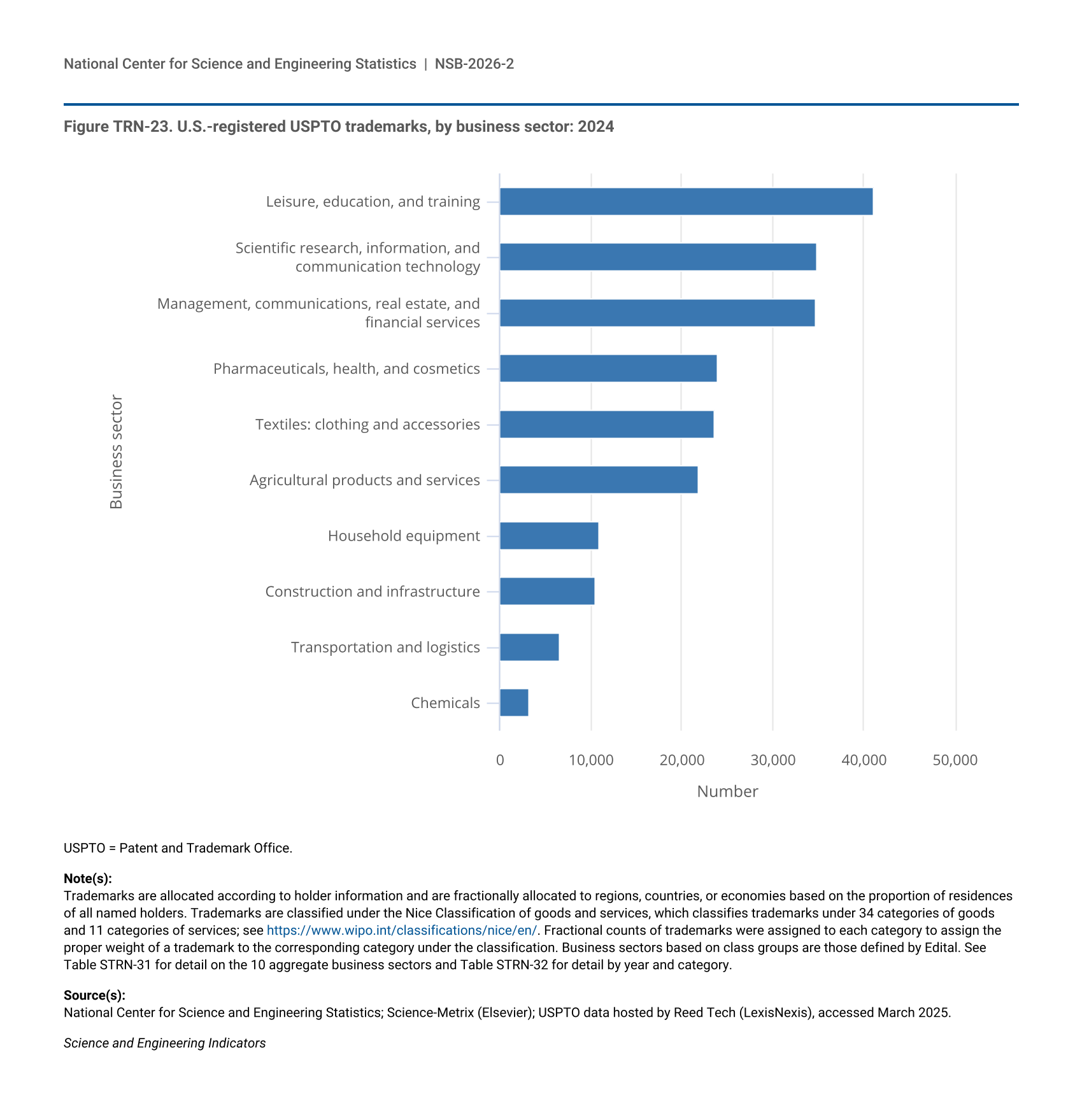
Trademark: A word, phrase, symbol, or design, or a combination thereof, that identifies and distinguishes the source of the goods of one party from those of others. In this report, trademark refers to both goods and services.
Utility patent: Intellectual property protection for a potentially useful, previously unknown, and nonobvious invention.
Value added: Value added is a net measure of output; it is the difference between the value of goods and services (gross output) and the cost of intermediate inputs that were used in production, including energy, materials, and services. Industry value added is a measure of an industry’s contribution to overall GDP.
Weapons and ammunition, manufacture of: This industry includes the manufacture of heavy weapons (such as artillery, mobile guns, and rocket launchers), small arms (revolvers, shotguns, light machine guns), ammunition, and explosive devices, as well as hunting and sporting firearms. Excludes the manufacture of space vehicles and tanks or other fighting vehicles (included in other industries).
Key to Acronyms and Abbreviations
ABS: Annual Business Survey
AI: artificial intelligence
BEA: Bureau of Economic Analysis
BLS: Bureau of Labor Statistics
COVID-19: coronavirus disease 2019
CRADA: cooperative research and development agreement
DOC: Department of Commerce
DOD: Department of Defense
DOE: Department of Energy
EPO: European Patent Office
EU-27: European Union
EV: electric vehicle
GDP: gross domestic product
GII: Global Innovation Index
GPT: general-purpose technologies
GVC: global value chain
HCA: highly cited article
HHS: Department of Health and Human Services
IEA: International Energy Association
IMF: International Monetary Fund
IP: intellectual property
IPP: intellectual property product
ISIC: International Standard Industrial Classification of All Economic Activities
IT: information technology
KTI: knowledge and technology intensive
MFP: multifactor productivity
NAICS: North American Industry Classification System
NASA: National Aeronautics and Space Administration
NCSES: National Center for Science and Engineering Statistics
nec: not elsewhere classified
NIST: National Institute of Standards and Technology
NSF: U.S. National Science Foundation
OECD: Organisation for Economic Co-operation and Development
OSS: open-source software
PCT: Patent Cooperation Treaty
QIST: quantum information science and technology
R&D: research and development
S&E: science and engineering
SBIR: Small Business Innovation Research
STTR: Small Business Technology Transfer
TFP: total factor productivity
TIP: Directorate for Technology, Innovation and Partnerships
USDA: Department of Agriculture
USPTO: Patent and Trademark Office
VA: Department of Veterans Affairs
VC: venture capital
WIPO: World Intellectual Property Organization