An official website of the United States government



Notes
1 Scientific field normalization of citations helps account for differences in citation practices from one scientific field to another. For example, one scientific field may have citation norms where authors generously cite existing work that a given article is building on, while another may only cite the most essential and influential work. Without normalization, the former scientific field in the preceding example may be overrepresented in the global top 1%, whereas the latter scientific field may have no articles in the global top 1%. This ensures proportionality with total output and highly cited output.
2 The employment affiliation is voluntarily supplied by GitHub users in their profiles; as a result, the sector and agency are not listed for a notable share of developers. This incomplete coverage may affect the reliability of location and sector analyses, which should be regarded as experimental at this time. Please see the Technical Appendix for more information on the limitations of this data source.
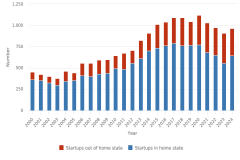
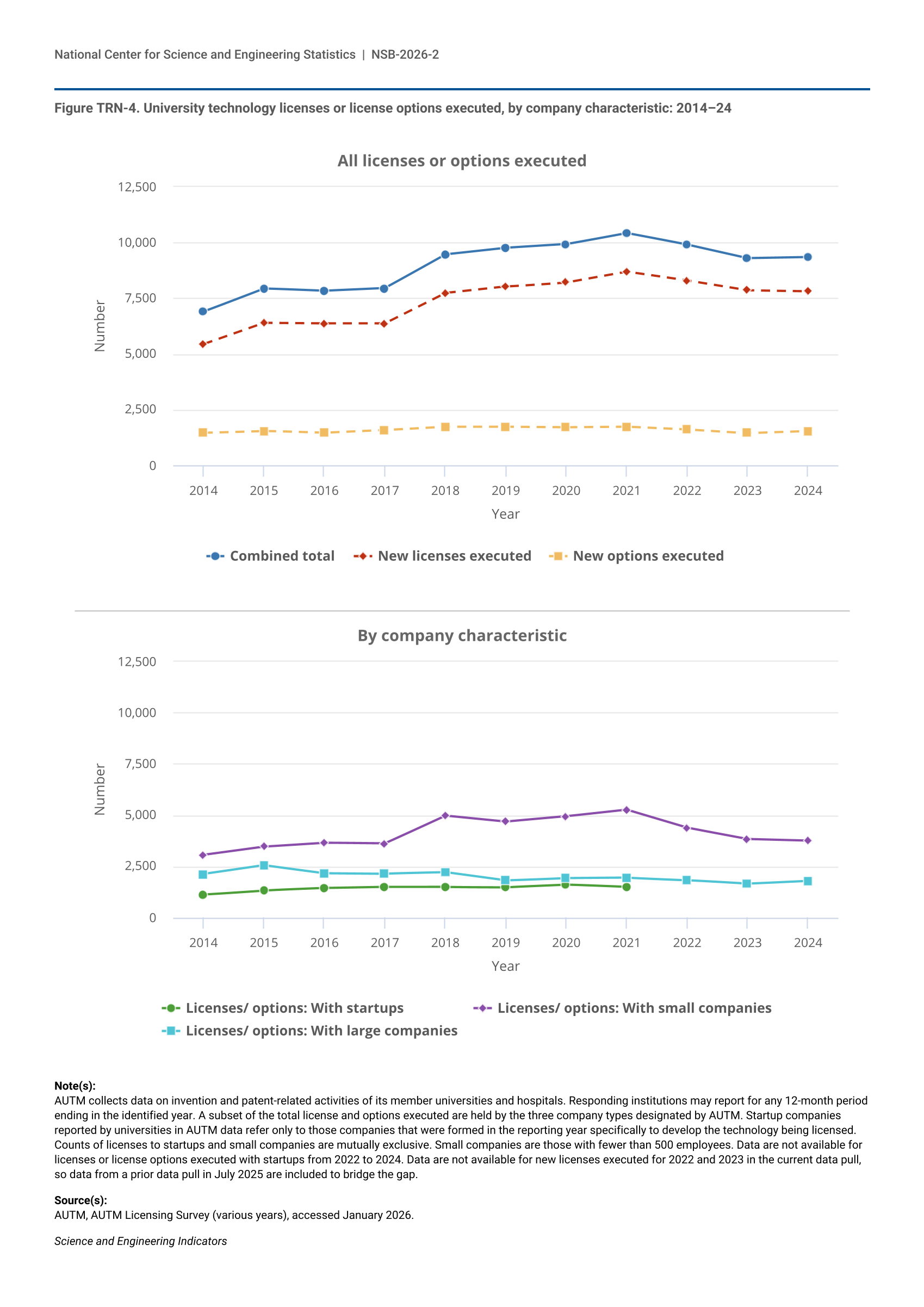
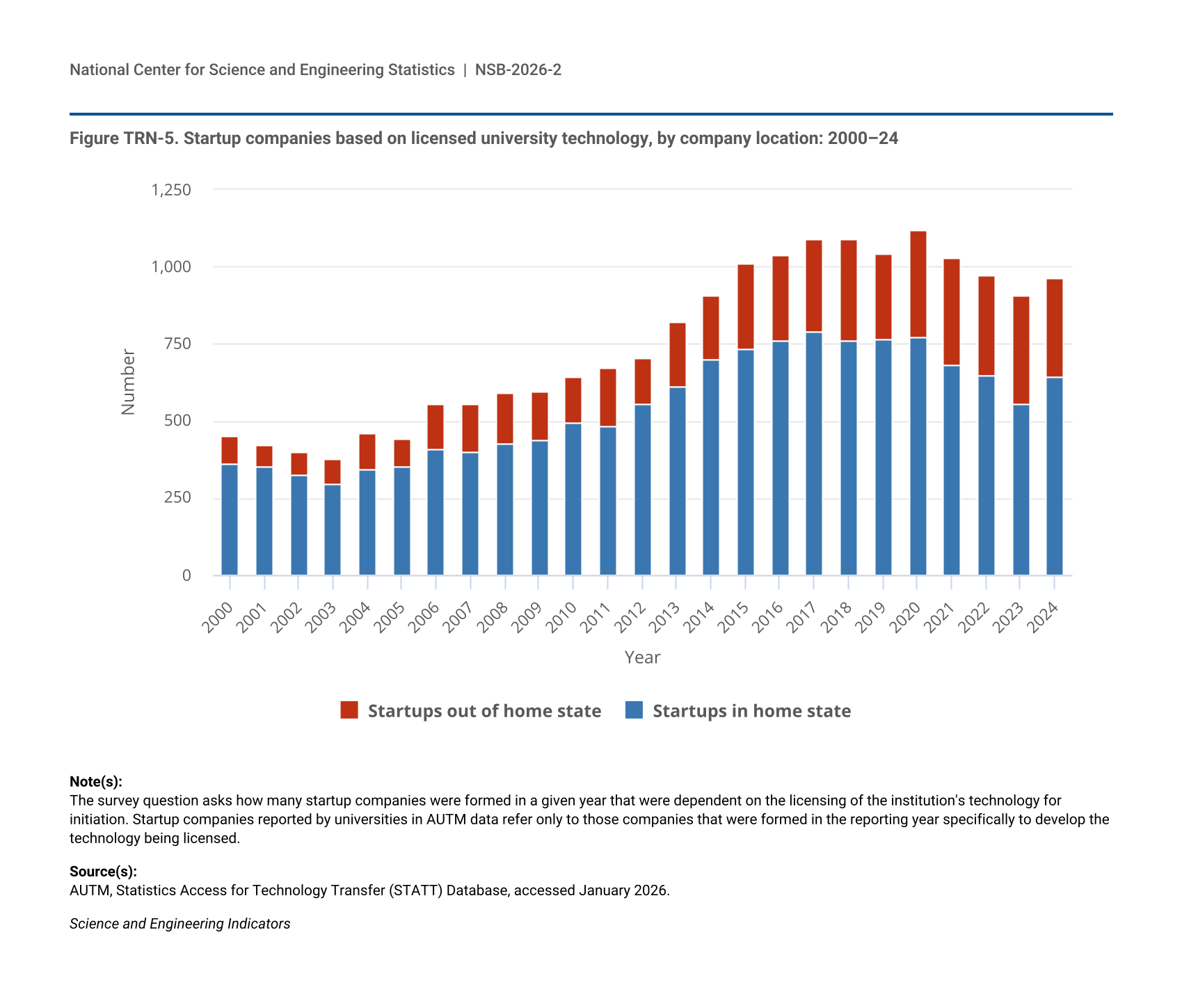
3 The designations of large companies (more than 500 employees), small companies (fewer than 500 employees), and startup companies in this section are designated by AUTM in its Licensing Survey. They differ from the size designations within business establishment surveys elsewhere in this report, including the Annual Business Survey.
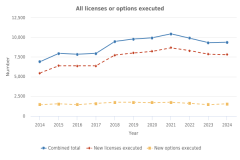
4 The number of licenses and license options executed by startups was not collected by AUTM after 2022.
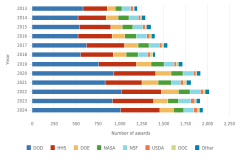
5 For more information on federal agency obligations, see the Indicators 2026 report “Discovery: R&D Activity and Research Publications” (NSB 2025) and NCSES (2025b).
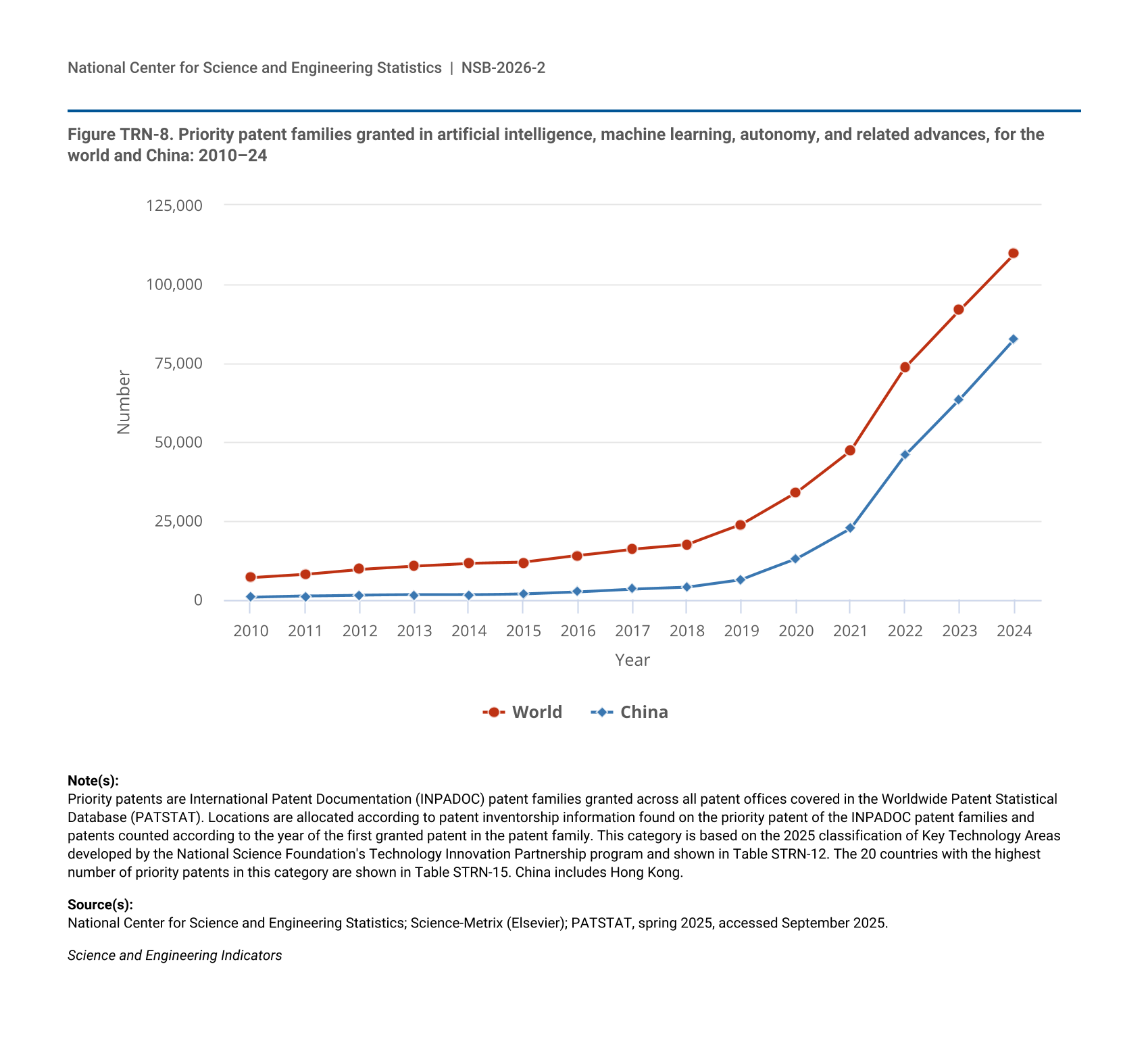
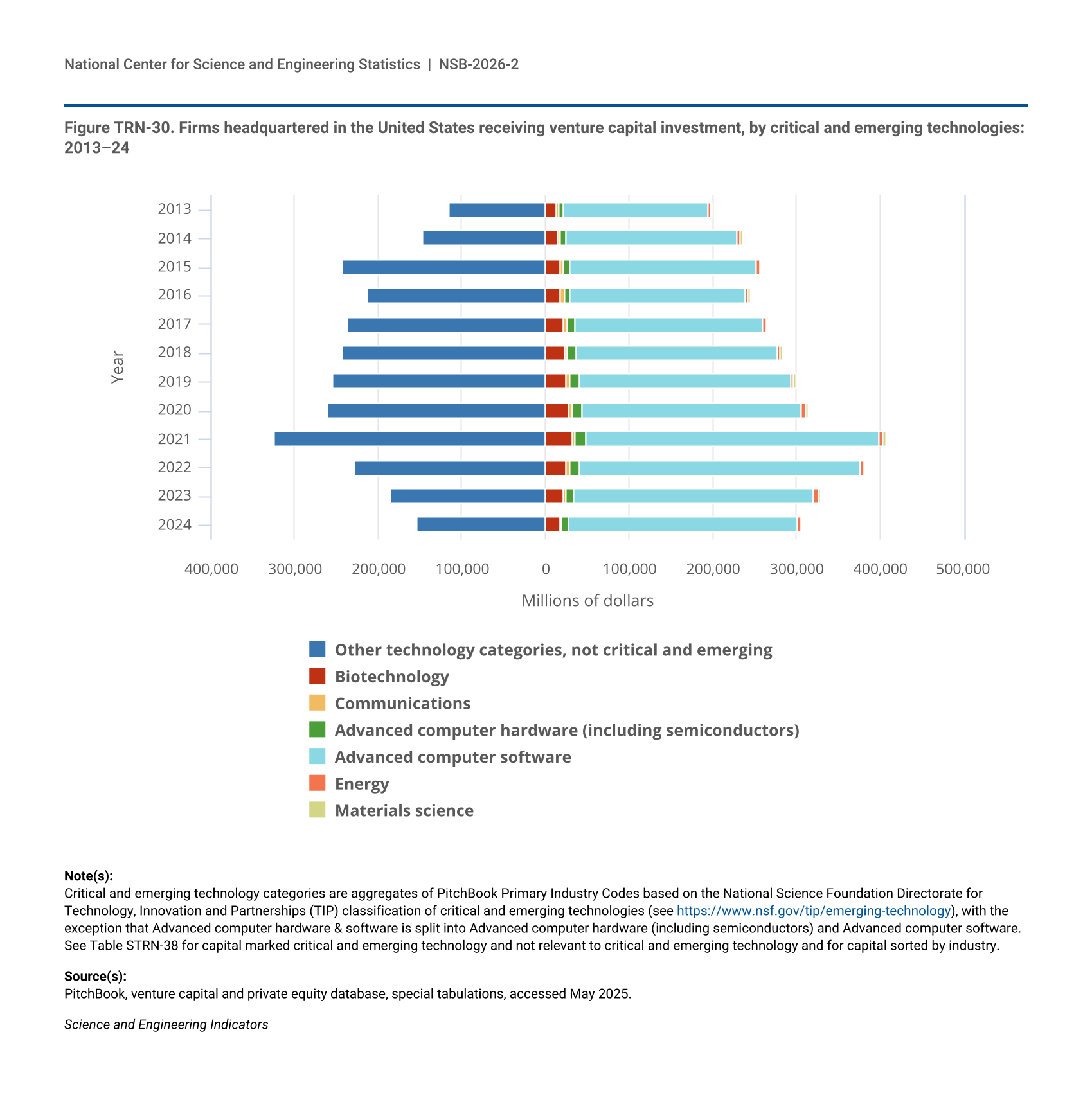
6 The classification of CETs discussed in this section differs from the ISIC-based KTI taxonomy discussed in the following section Production Patterns of Knowledge- and Technology-Intensive Industries.
7 R&D-intensive manufacturing industries may engage in design, processes, or materials analyzed in the literature under several headings, including advanced manufacturing and intelligent manufacturing. Examples include additive or nano-based manufacturing and biotechnology and biomanufacturing. For additional information, see Brocal, Sebastián, and González (2019), IDA (2012), and PCAST (2020).
8 See Thomas (2026) for comprehensive economic statistics on U.S. manufacturing.
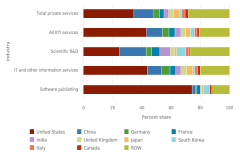
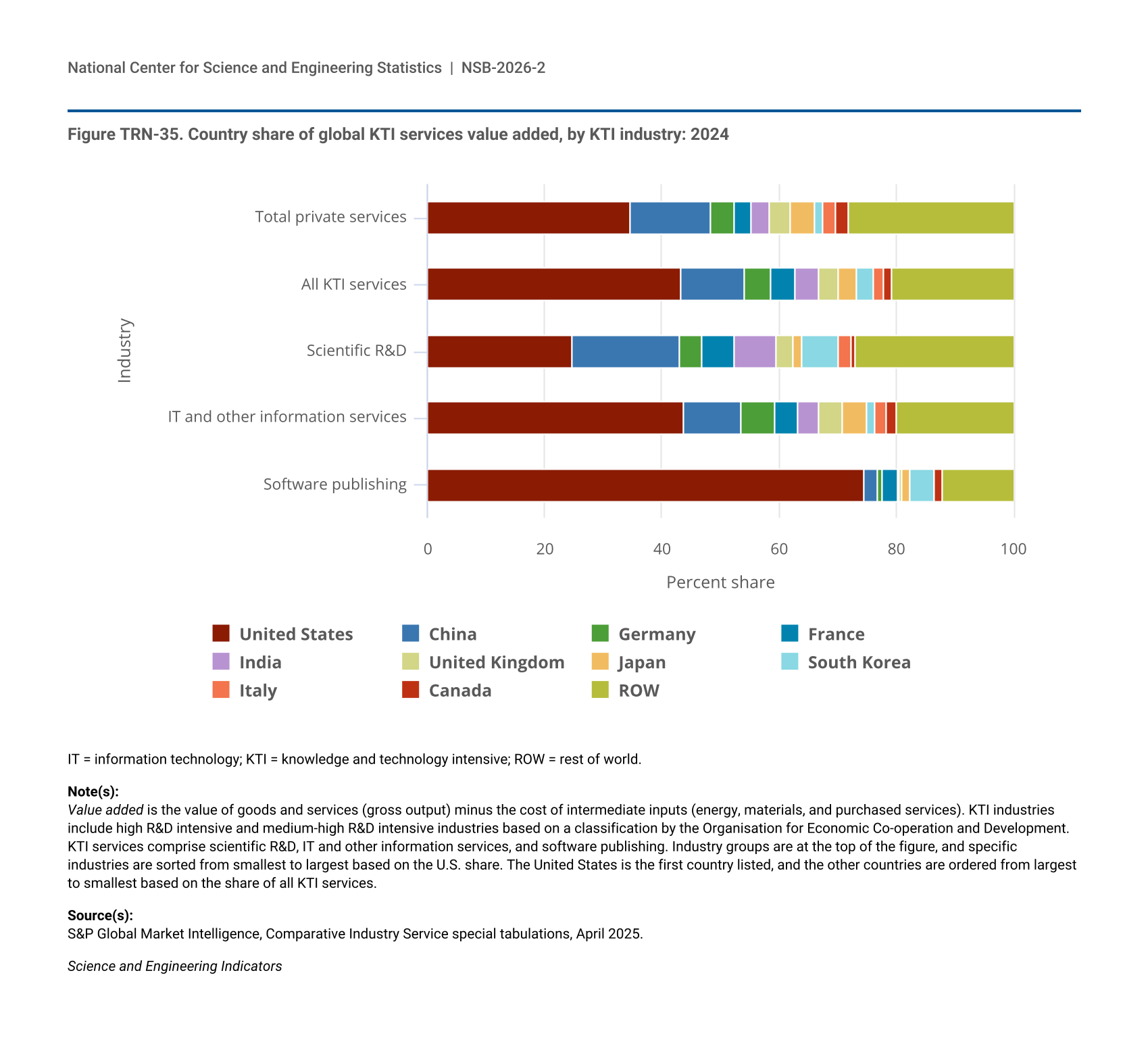
9 See the Glossary section for the definition of total private services used in this report.