An official website of the United States government



Conclusion
As the bedrock of the U.S. S&E enterprise, STEM talent contributes to the competitiveness of U.S. research and U.S. industry globally. This report presents indicators of the STEM workforce, pathways to STEM employment, persistence and attrition in STEM, and international comparisons of U.S. STEM competitiveness. A globally competitive infrastructure through which STEM talent is educated and trained to join the workforce remains a key part of the performance of the domestic S&E enterprise.
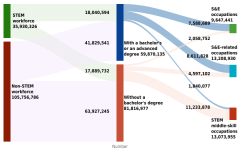
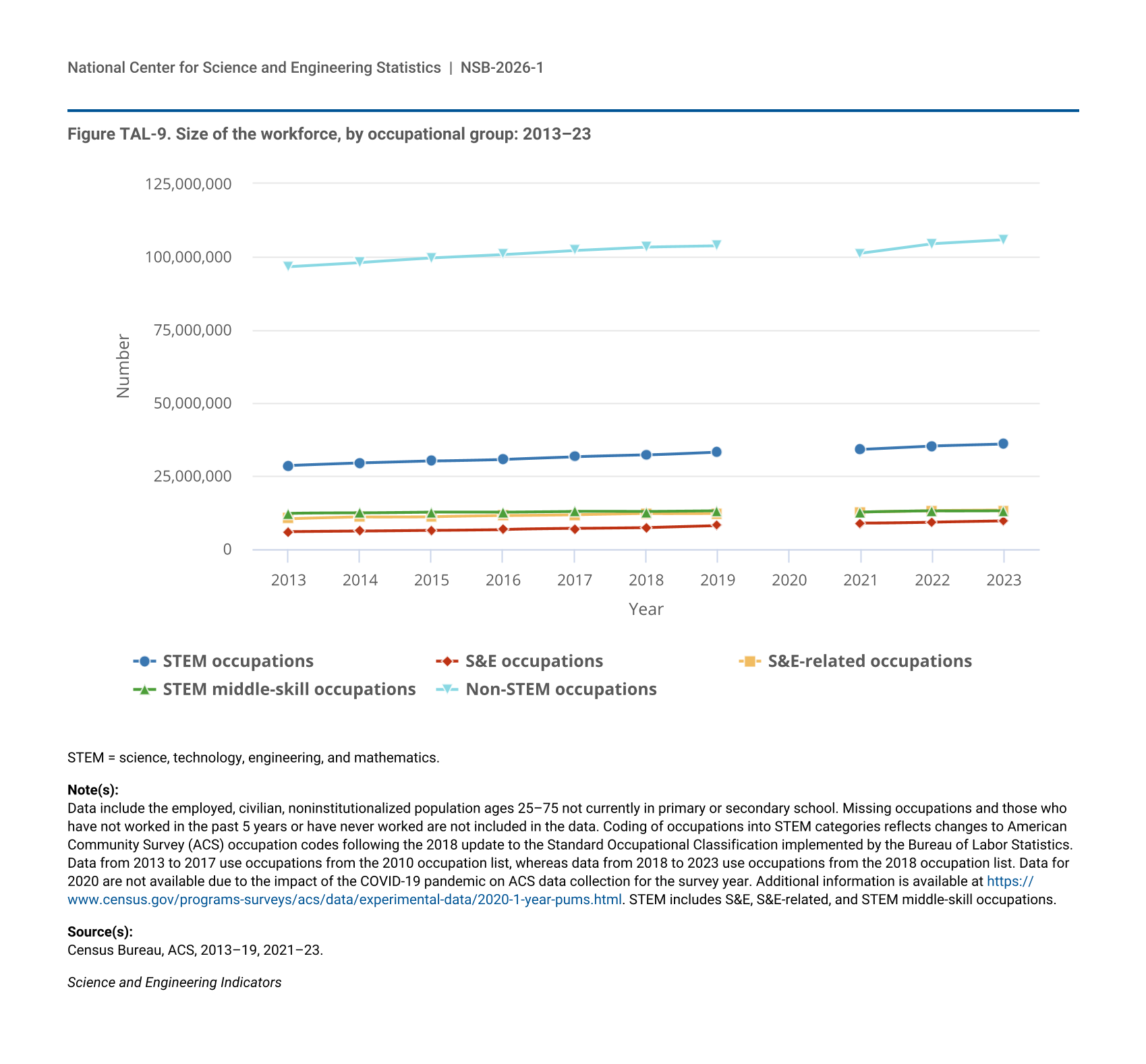
In 2023, STEM workers made up 25% of the U.S. workforce. Employment in STEM occupations increased by 26%, from 29 million in 2013 to 36 million in 2023, and contributed to increasing shares of the workforce. From 2013 to 2023, the unemployment rate of STEM workers was lower than that of non-STEM workers each year, and STEM occupations had higher median earnings ($76,000) than non-STEM occupations ($55,000).
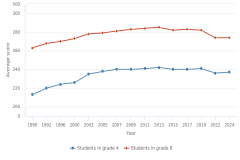
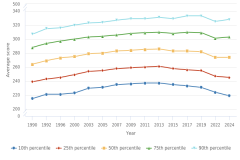
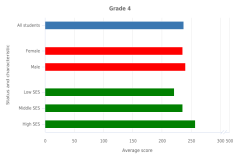
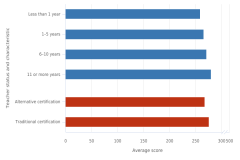
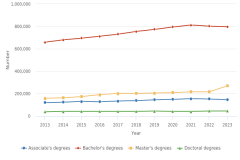
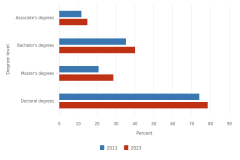
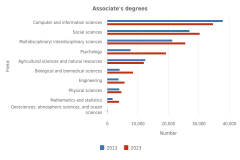
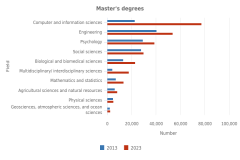
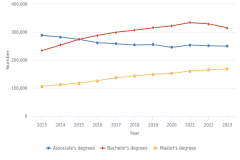
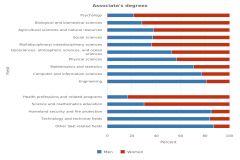
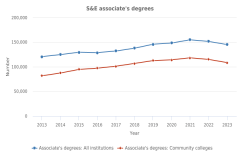
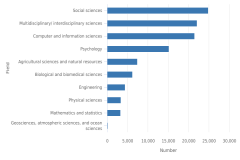
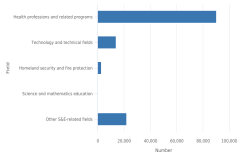
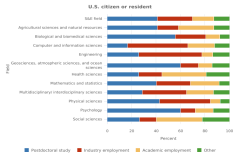
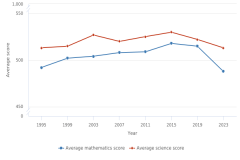
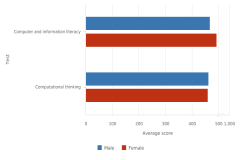
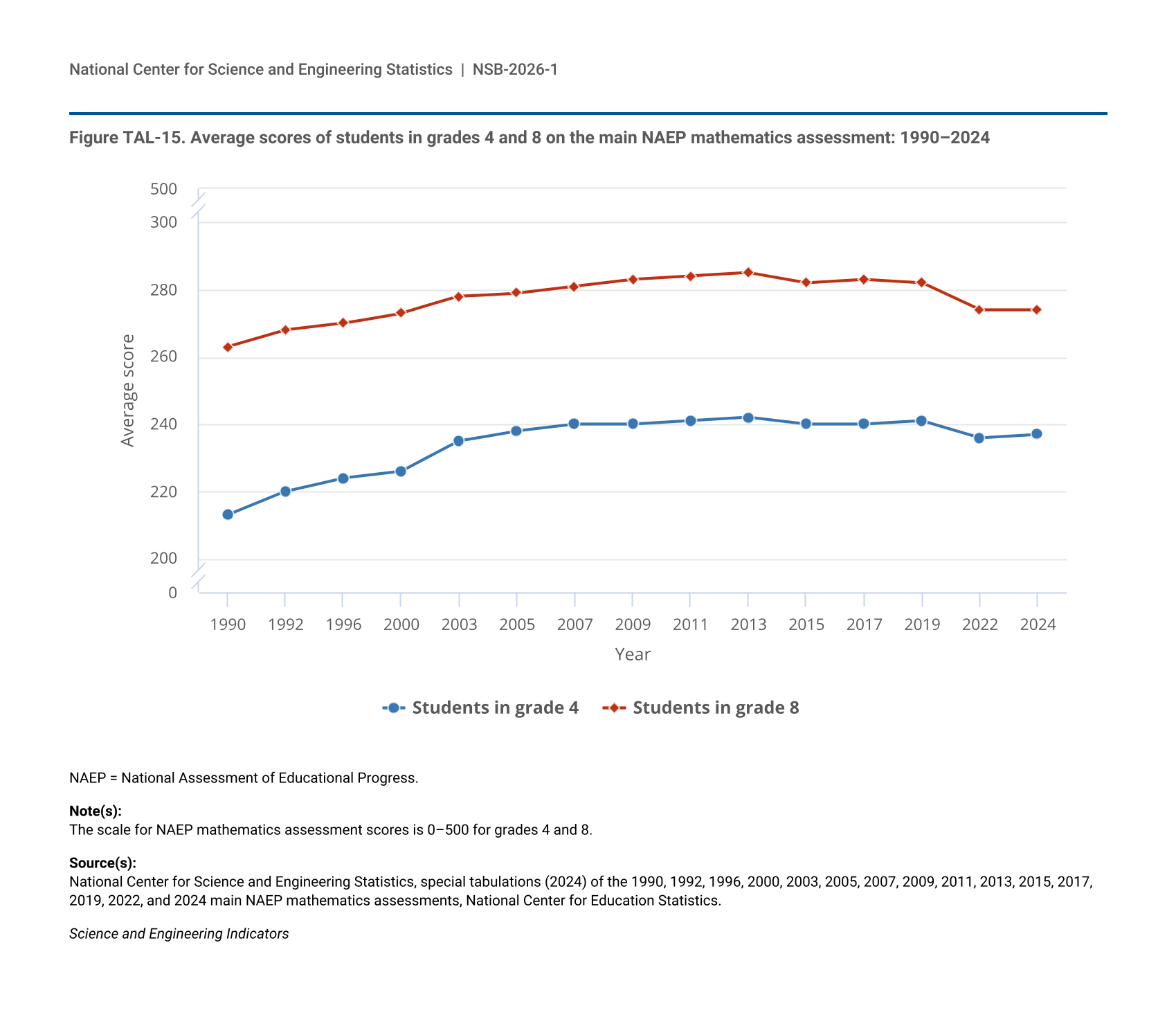
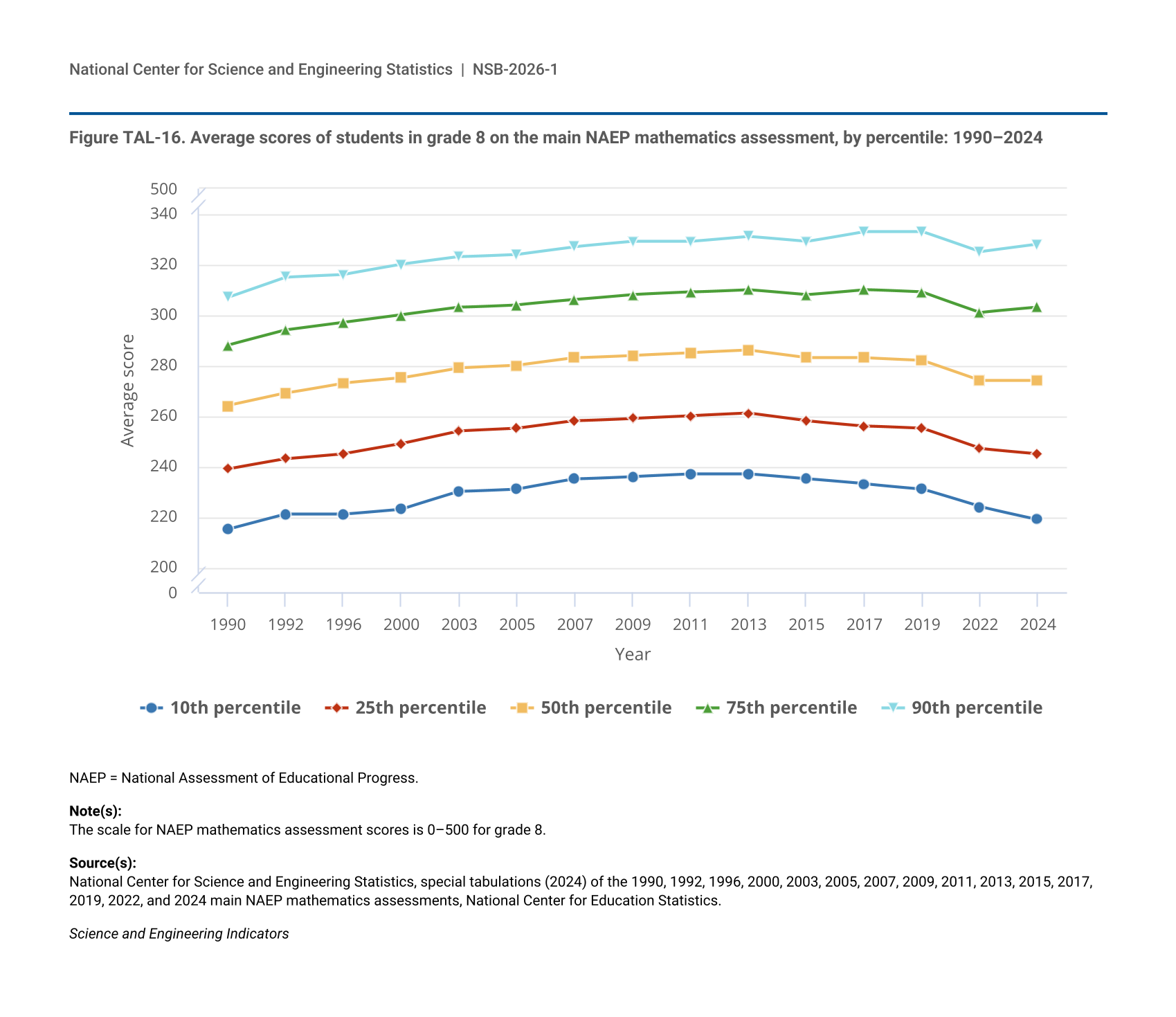
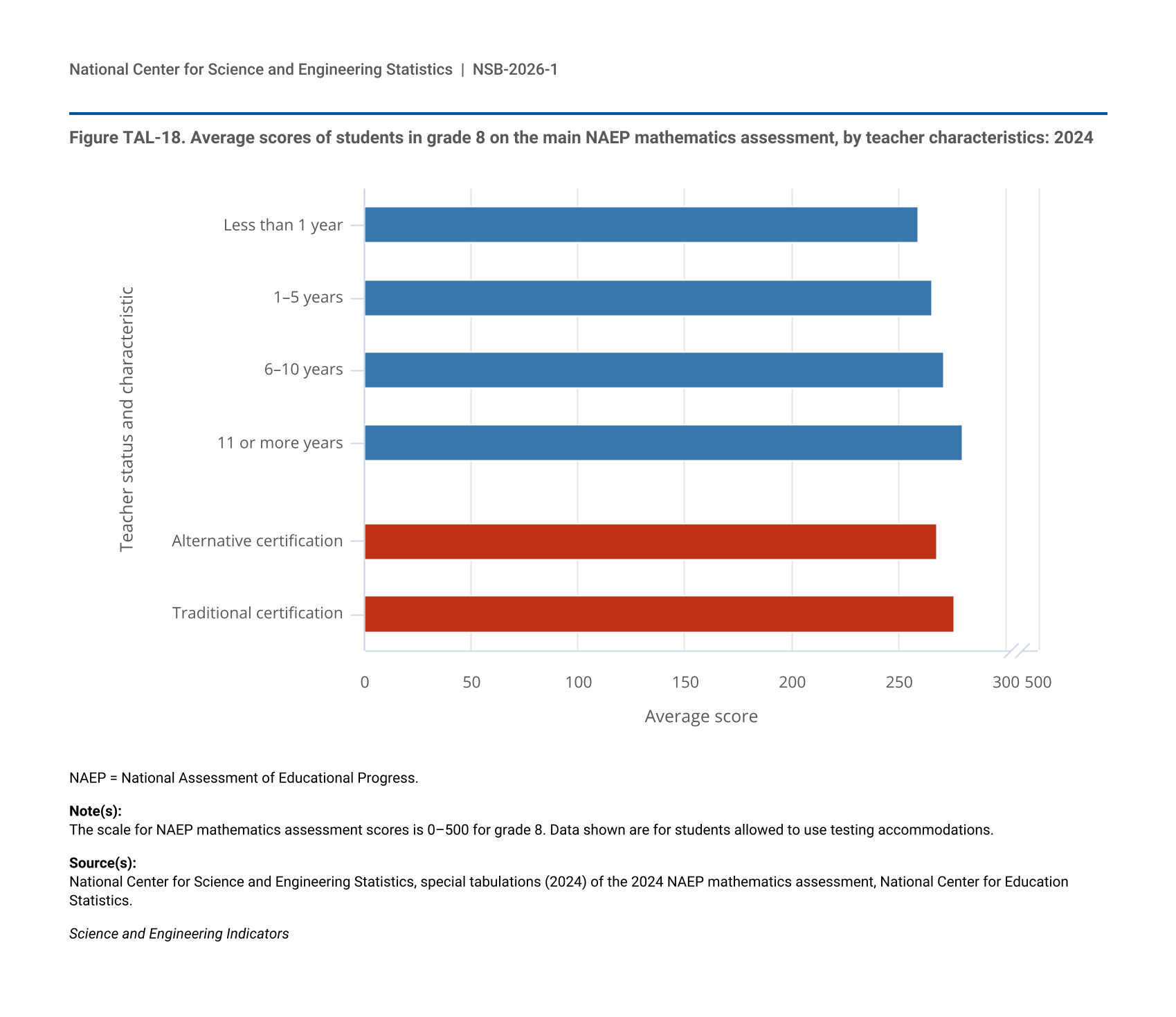
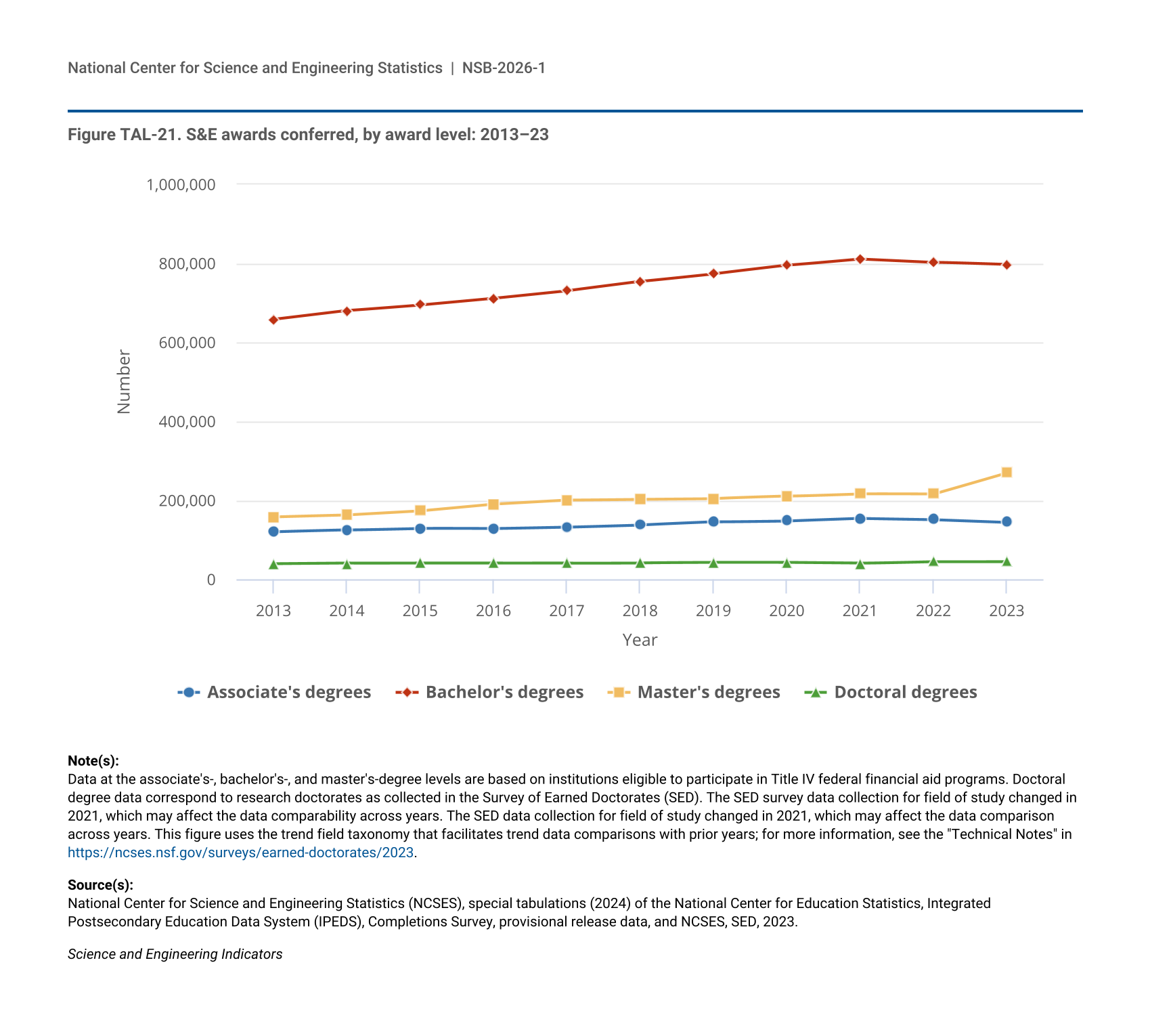
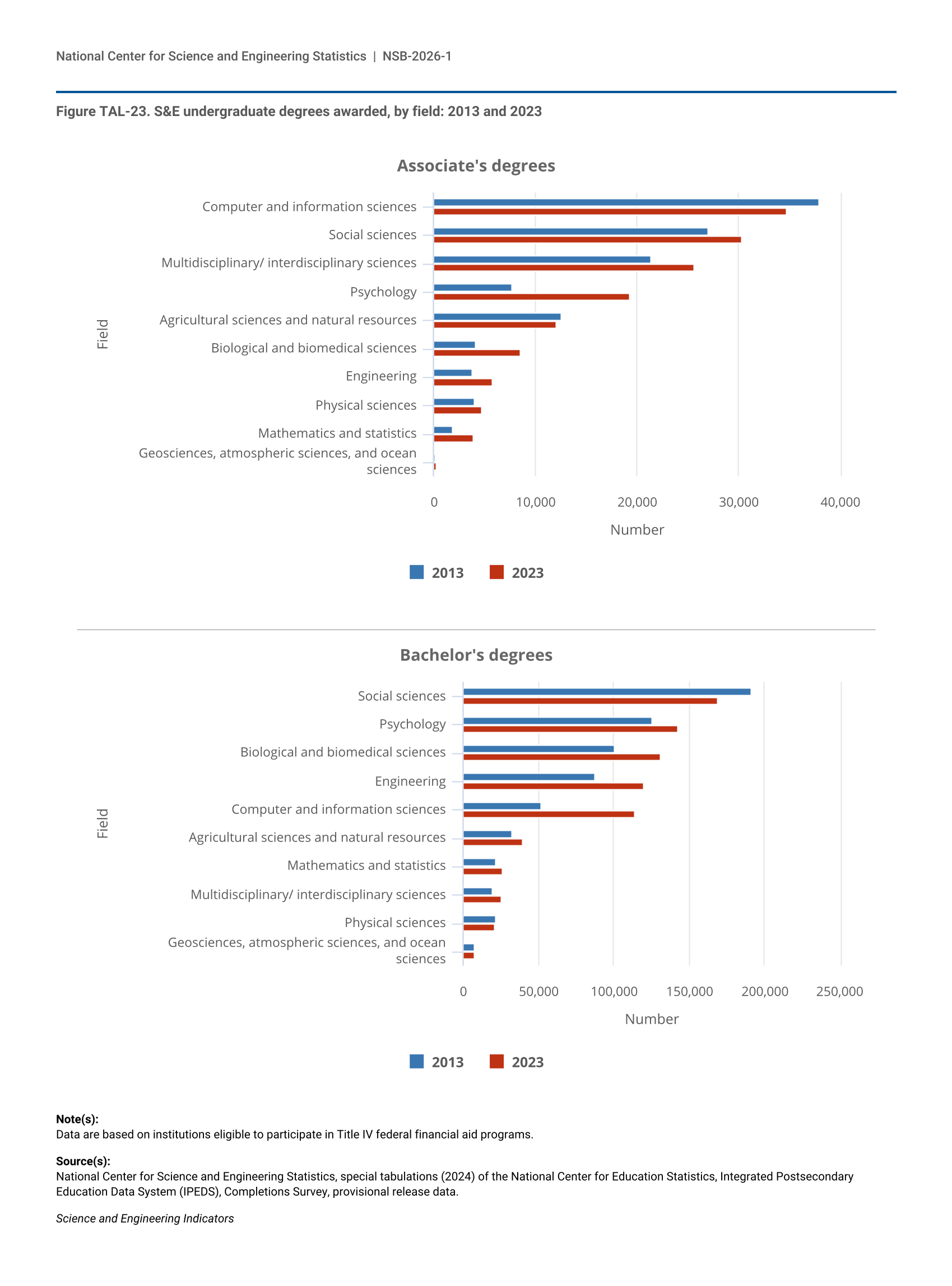
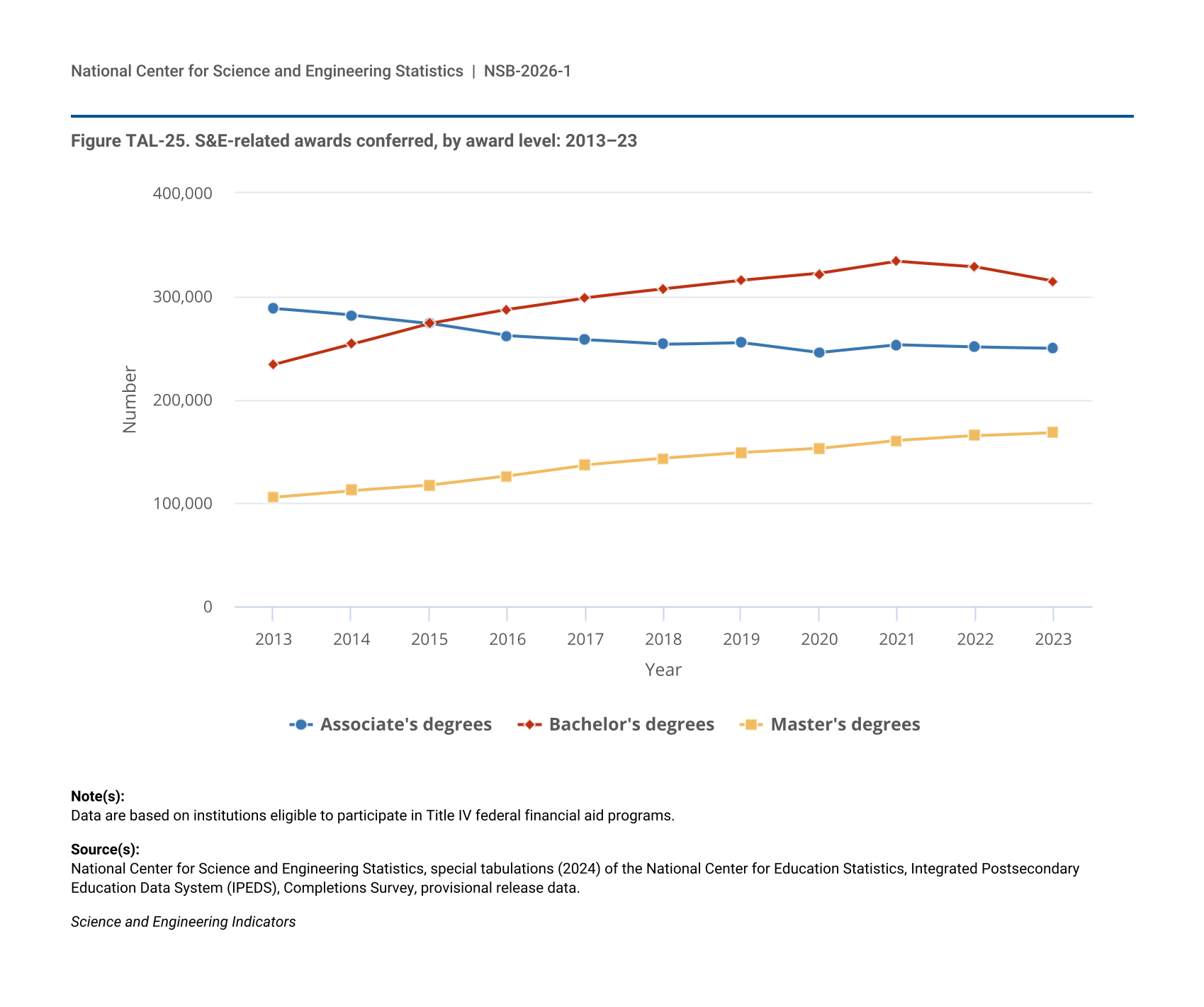
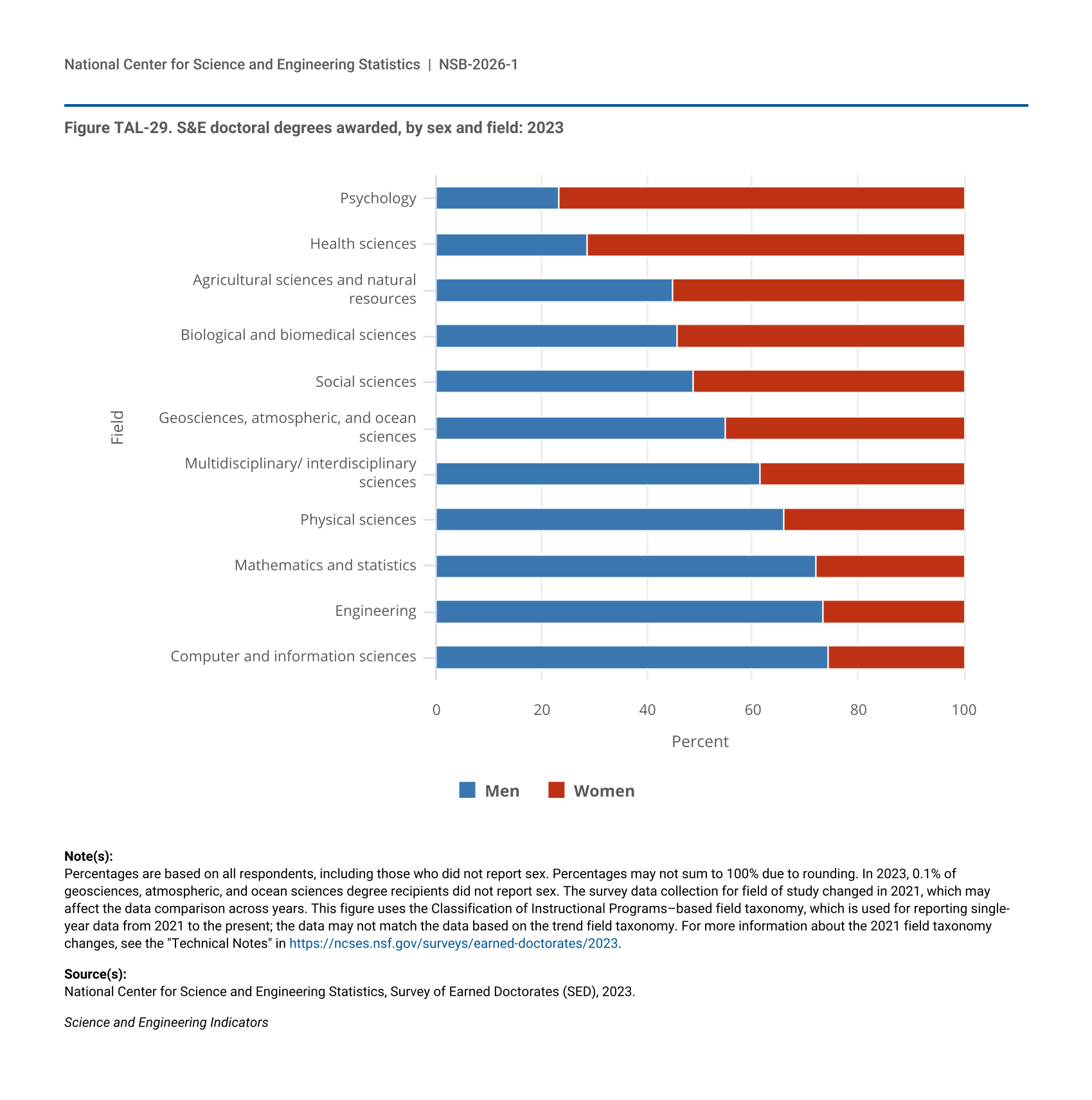
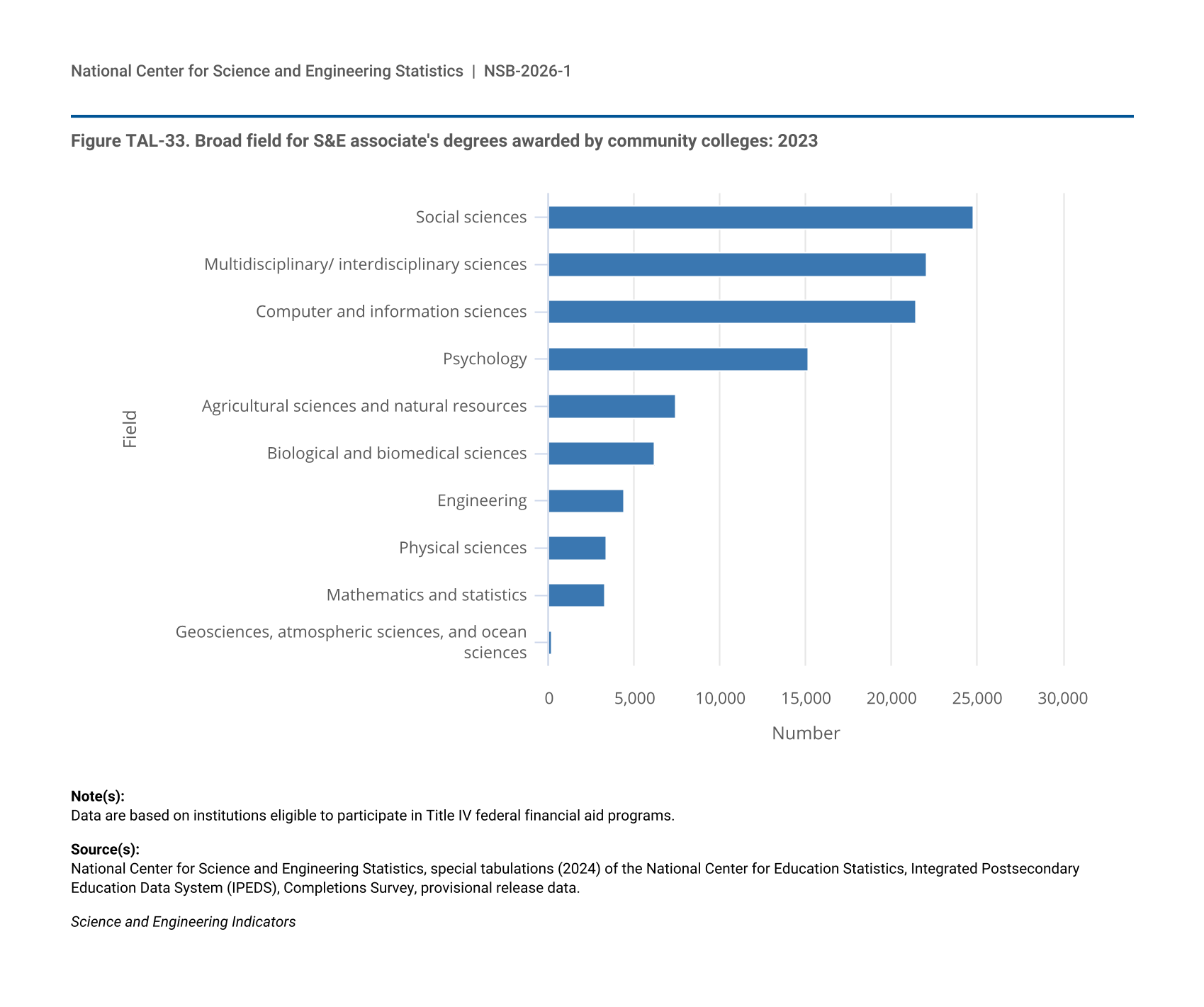
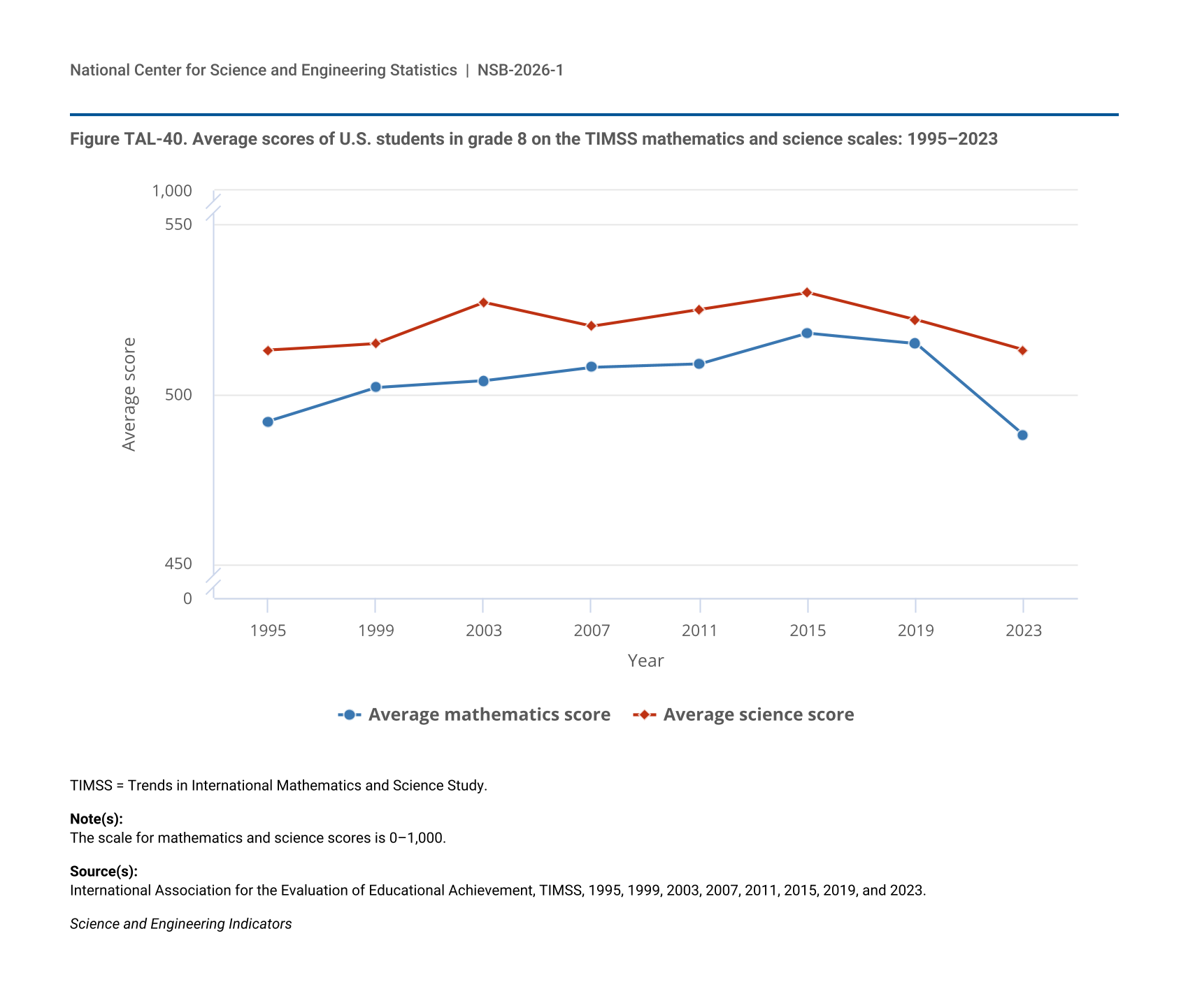
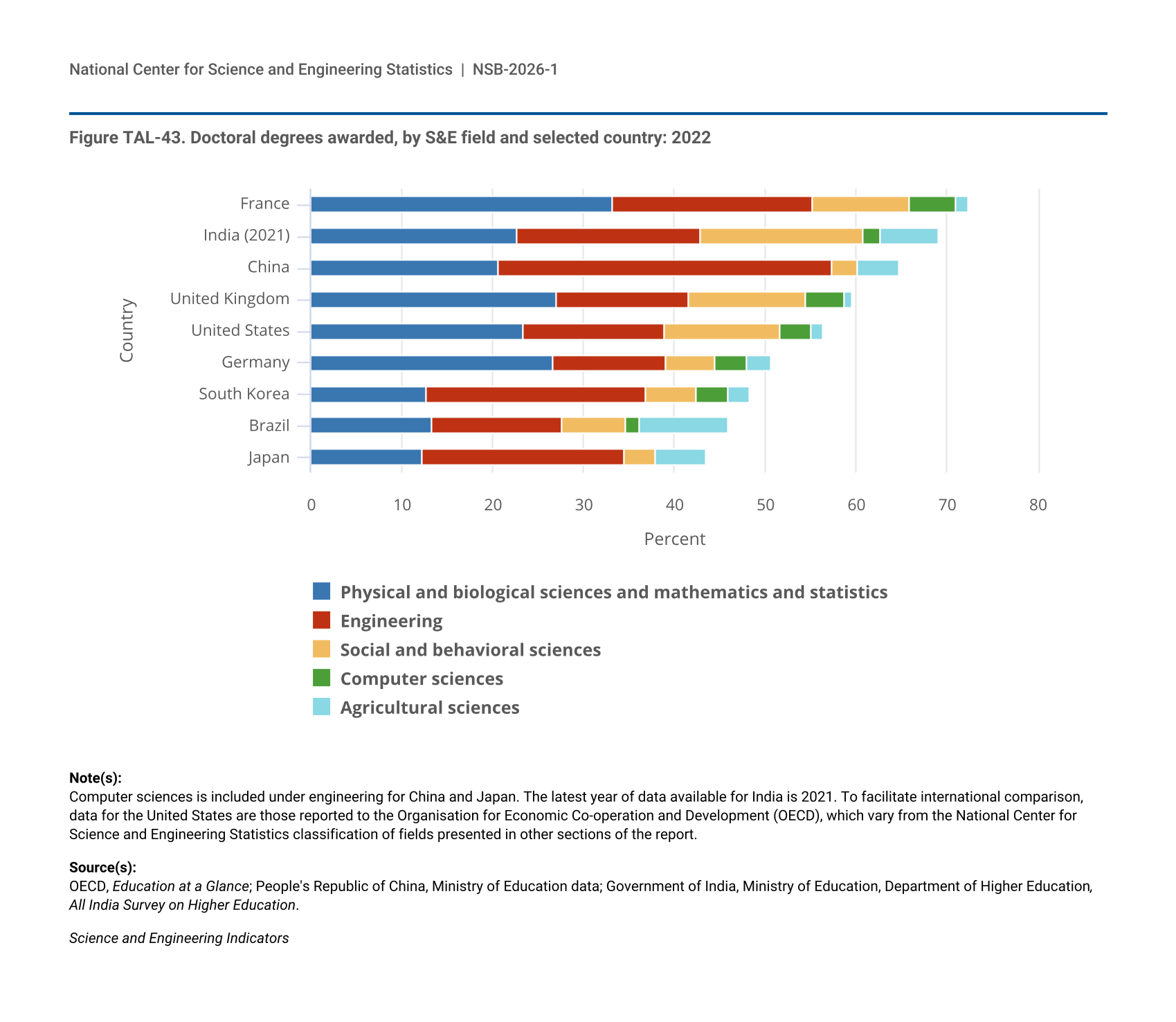
Education data showed that U.S. fourth and eighth graders demonstrated some, but not complete, learning recovery after the COVID-19 pandemic for higher-performing students but no improvement for lower-performing students. Further, students taught by teachers with 6 or more years of experience or by credentialed teachers posted higher scores than students taught by less-experienced teachers or teachers with alternative certifications. Between 2021 and 2023, the number of students earning S&E master’s degrees and doctoral degrees reached new peaks, whereas the number of students earning associate’s and bachelor’s degrees declined. At the associate’s and master’s levels, computer and information sciences was the top field of study. At the bachelor’s level, the top field was the social sciences; at the doctoral level, it was engineering.
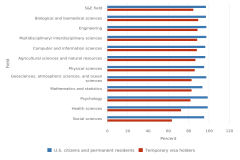
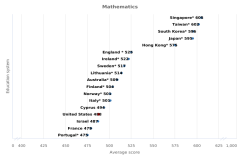
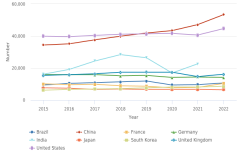
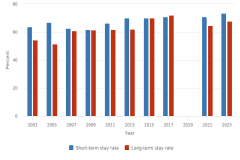
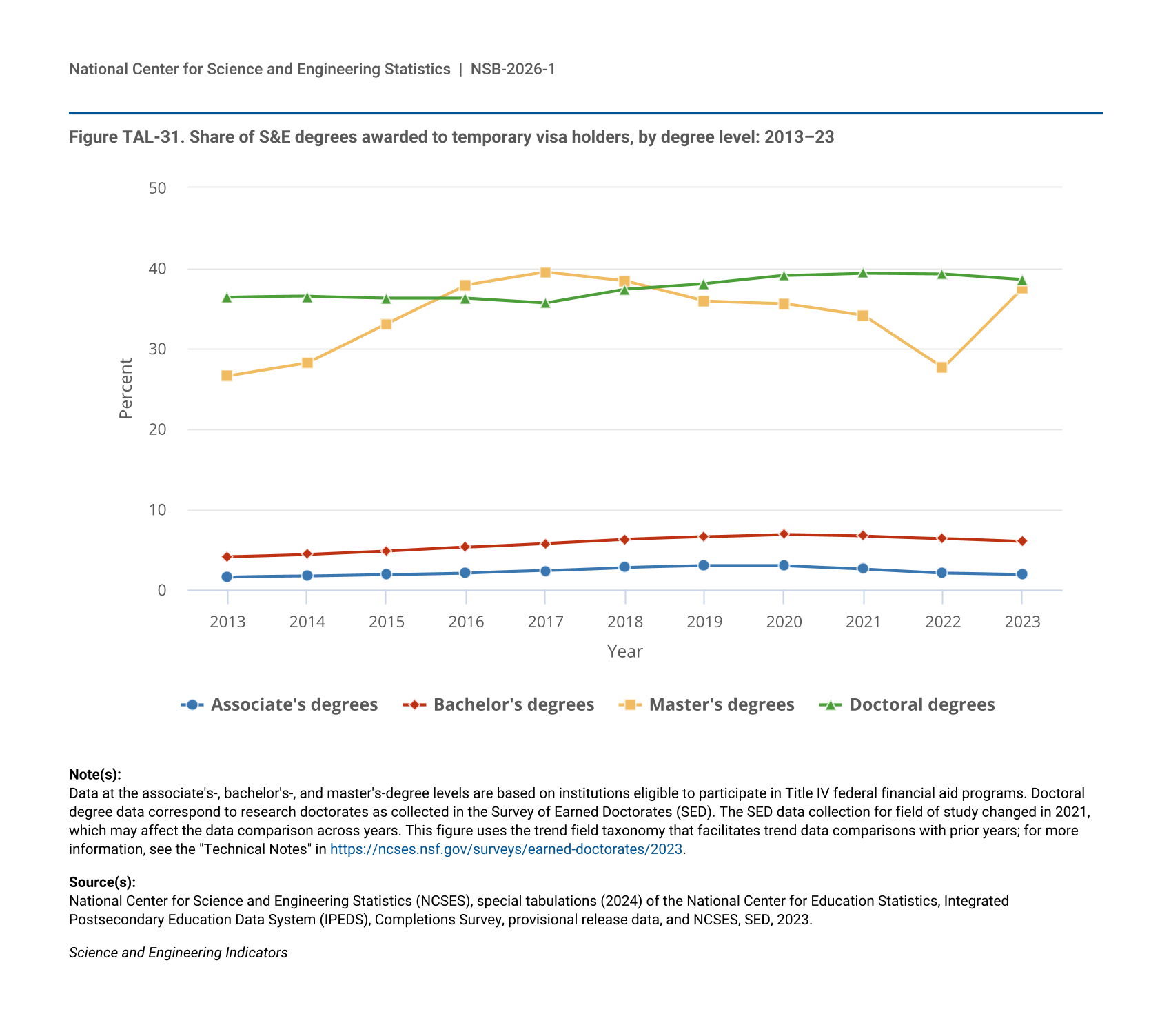
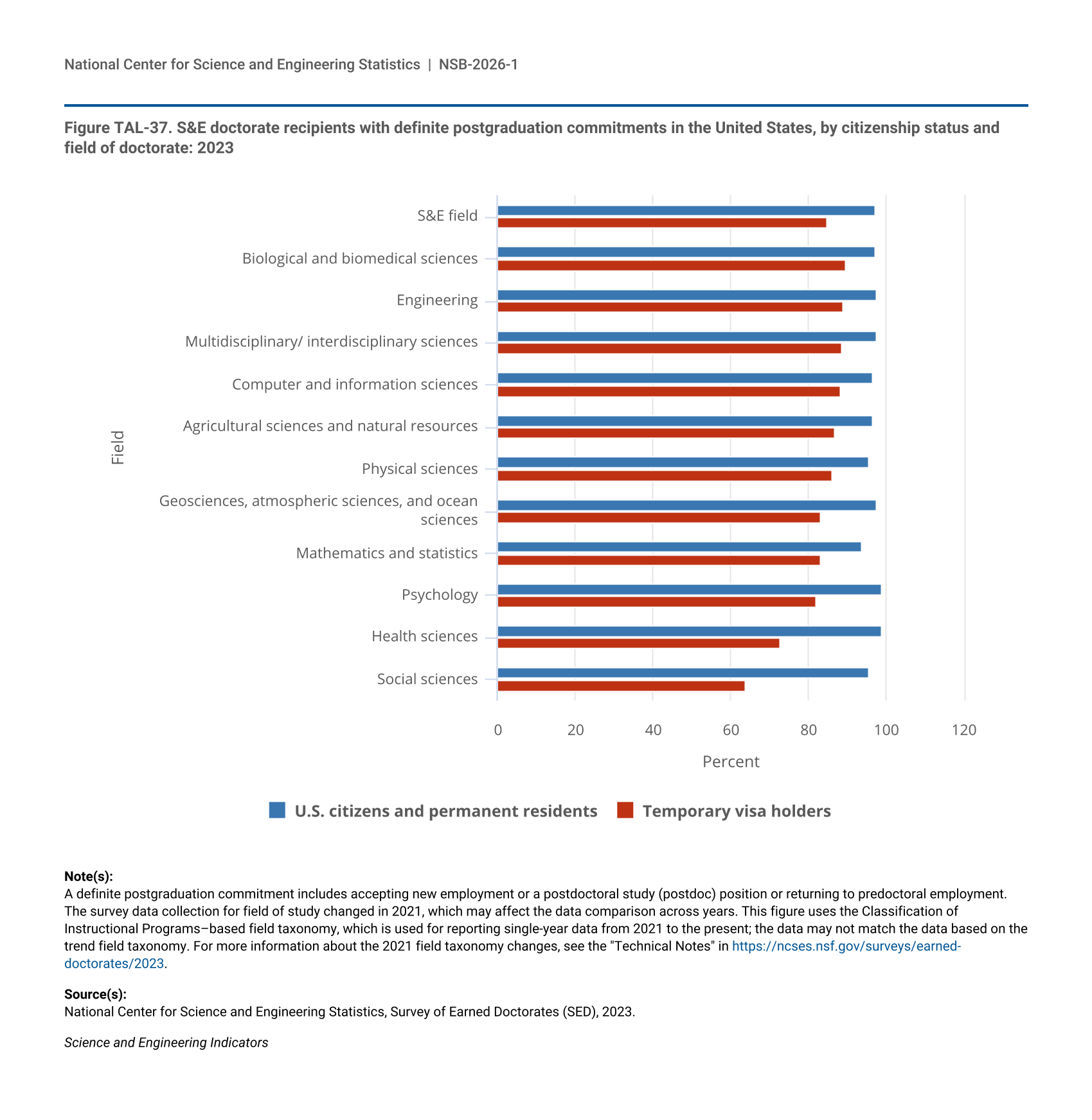
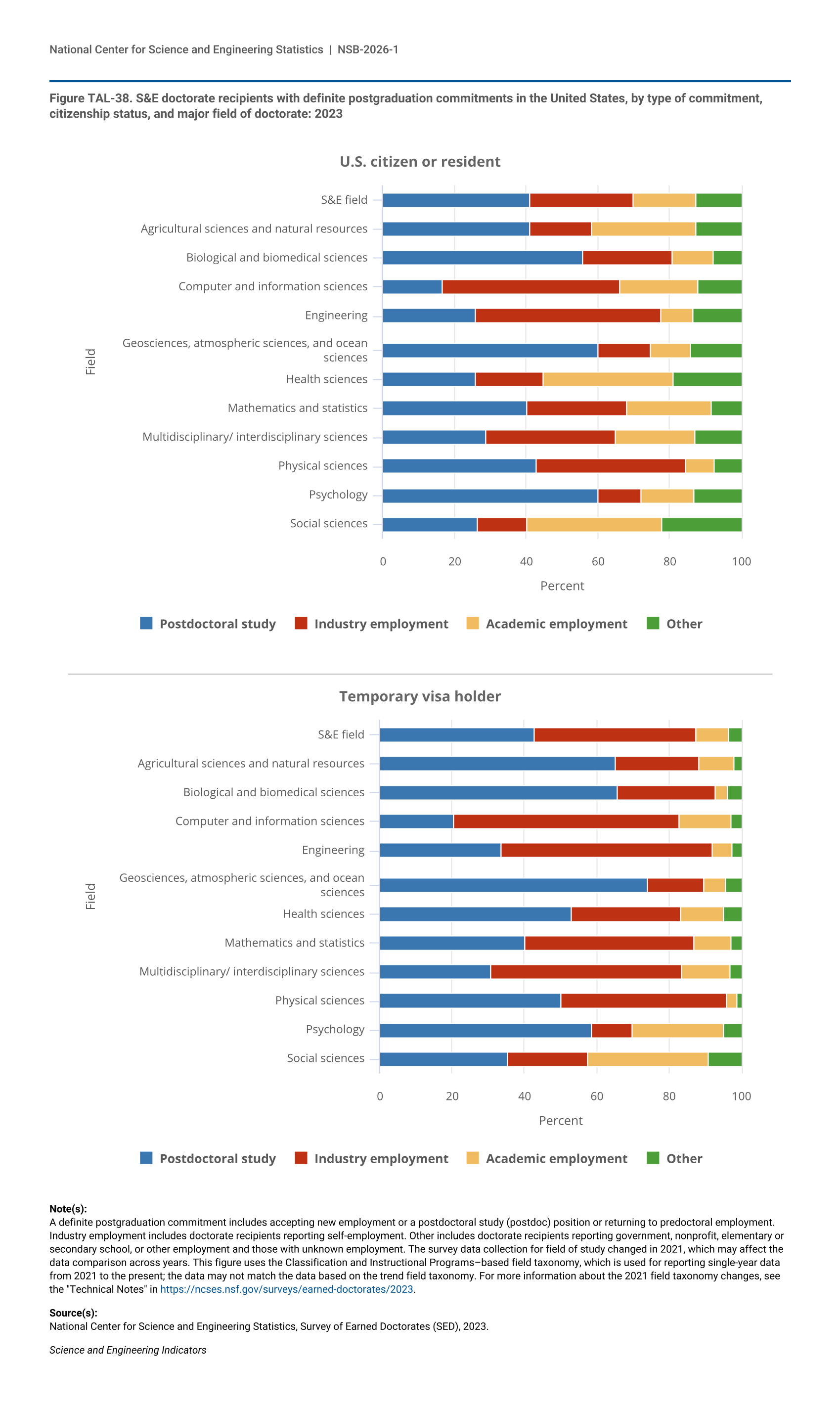
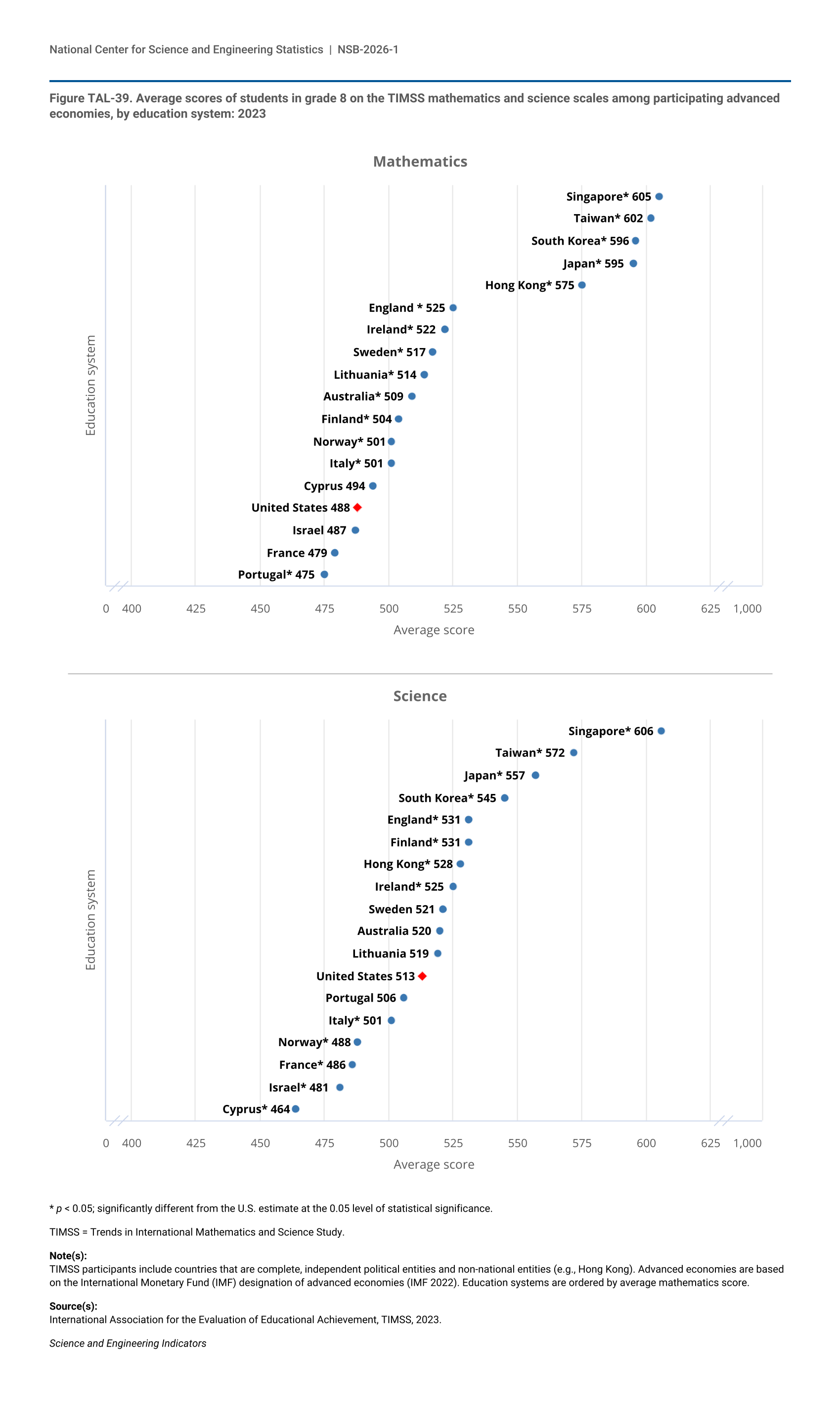
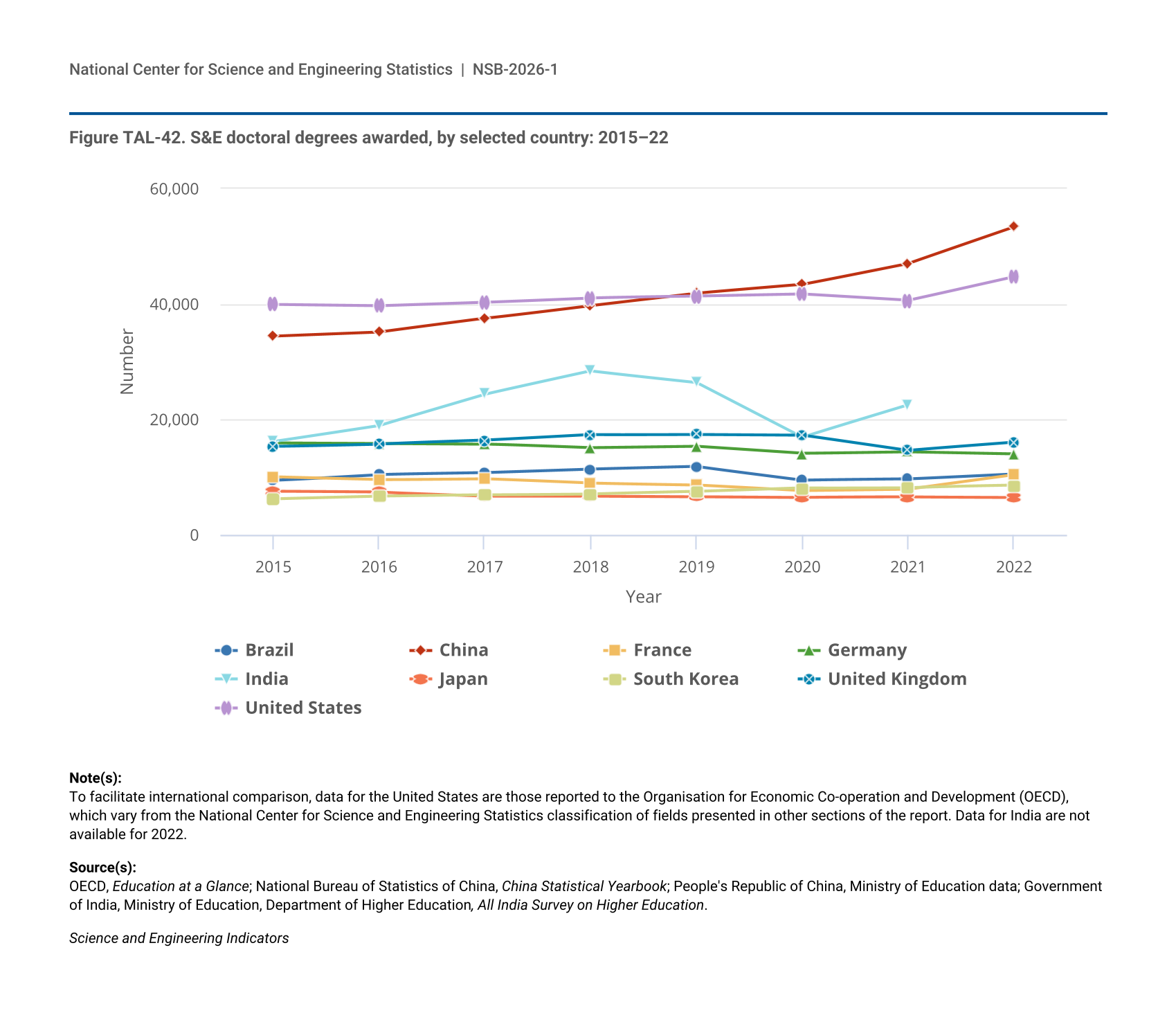
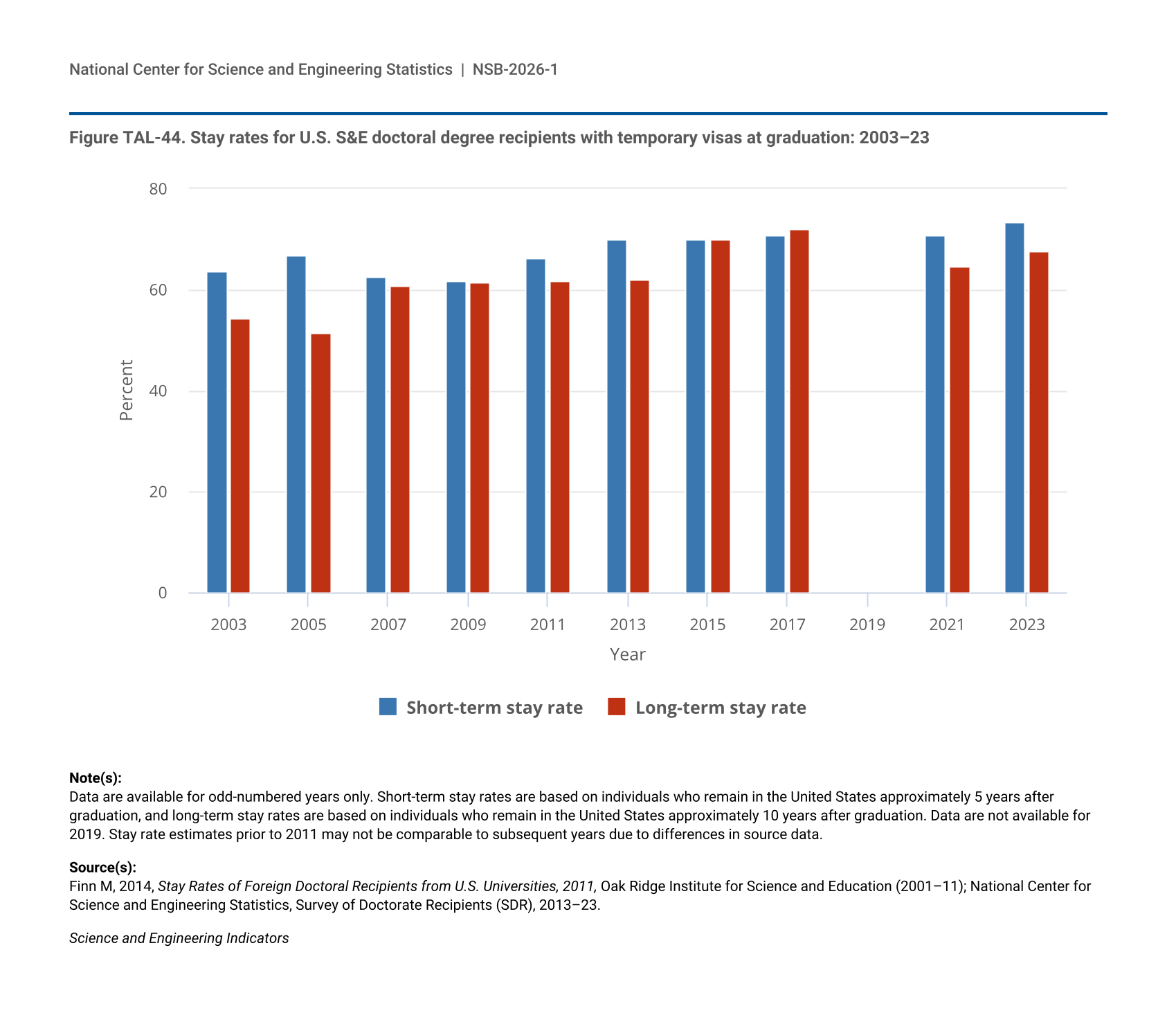
U.S. K–12 students perform lower on average than students in other countries in mathematics and science assessments. Institutions of higher education in China awarded the highest number of S&E doctoral degrees in 2022 (53,000), followed by the United States (45,000). In 2023, 39% of S&E doctorate recipients who earned their degree at U.S. universities were temporary visa holders; three-quarters of them reported the intention to stay in the United States after completing their degree and more than half had definite commitments to stay at the time they obtained their doctorate. Overall, the United States continues to attract the largest number of internationally mobile students worldwide, although its share of international students has dropped since 2017.